Kherson community on online sextortion: An honest conversation after the film
Kherson community on online sextortion: An honest conversation after the film

In the digital world, where the boundaries between private and public get blurred every day, a single moment can turn a person’s life upside down. This is exactly what happened to the Spanish director Patricia Franquesa, whose story formed the basis of the film My Sextortion Diary.
In May 2019, Patricia’s laptop was stolen in a cafe. It seemed like a mundane crime. But a few months later, an email from an anonymous hacker appeared in her inbox: a threat to send her intimate photos to all her friends and professional contacts unless she paid $2,400. Photo: still from the film My Sextortion Diary
The director’s world collapses. The police are powerless, and fear and shame paralyse her. At this very point, Patricia decides: she will not become a victim. She begins her own investigation — and turns her experience into a film in which she speaks about human vulnerability on the internet and about how difficult it is to overcome the emotional consequences of extortion.
“I realized: if it was so hard for me, an adult woman, to cope with shame and fear, then what do teenagers feel?” says Patricia. “I had to make this film — not only for myself, but also for those who may find themselves in this situation.” Photo: still from the film My Sextortion Diary, directed by Patricia Franquesa
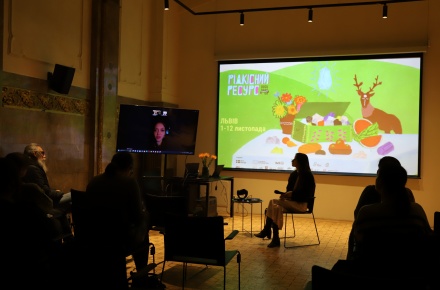
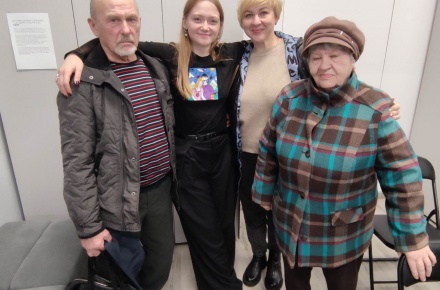
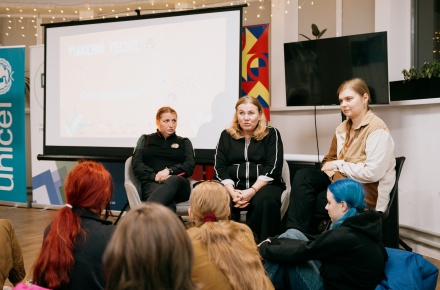
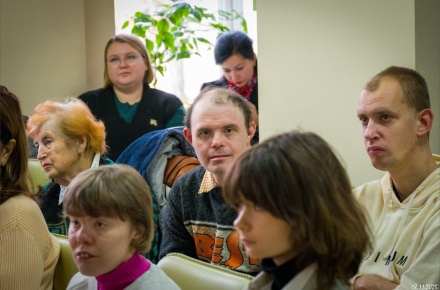
The film My Sextortion Diary was shown at the SVOYE Kherson Educational Training Center as part of the Travelling Docudays UA. After the screening, the participants discussed what they had seen. Namely: fear, dignity, support systems, and digital safety.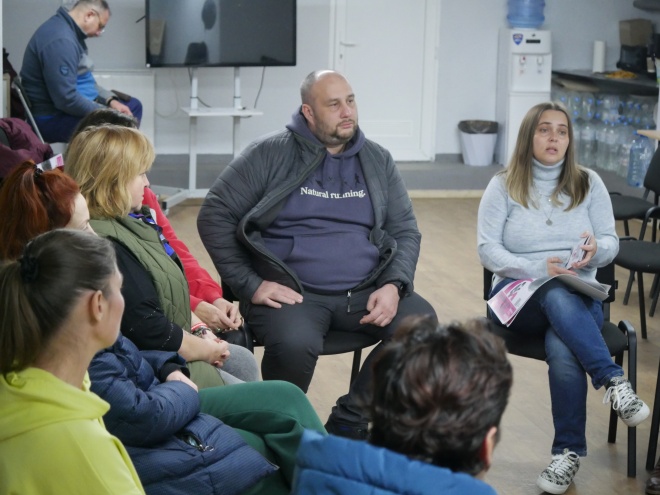 Photo: Discussion of the film by the Kherson community, by Ustin Danchuk, Media Platform Vgoru
“Extortion is not about money, it’s about vulnerability”
Natalia Kraska, head of the Department for Counteracting Domestic Violence of the Kherson City Social Services Centre:
“The protagonist wanted to protect her dignity. But not everyone will be able to go through this long path. We need to be closer to our loved ones so that they can tell us about their problem. All these cases are not about money. It’s about a hook. And what is even more frightening is when the extortionist moves on to direct phone calls, because that is a real threat to life.”
Natalia also emphasised that cases in which intimate materials concern people in same-sex relationships are especially traumatic: public judgment is often much harsher. And she added:
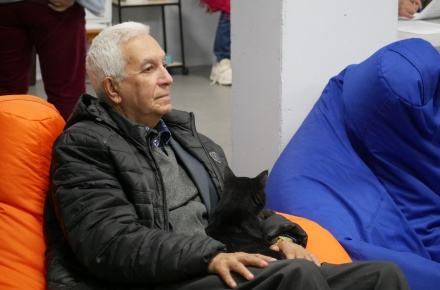
“We know how to protect our bank cards, but not our digital safety.”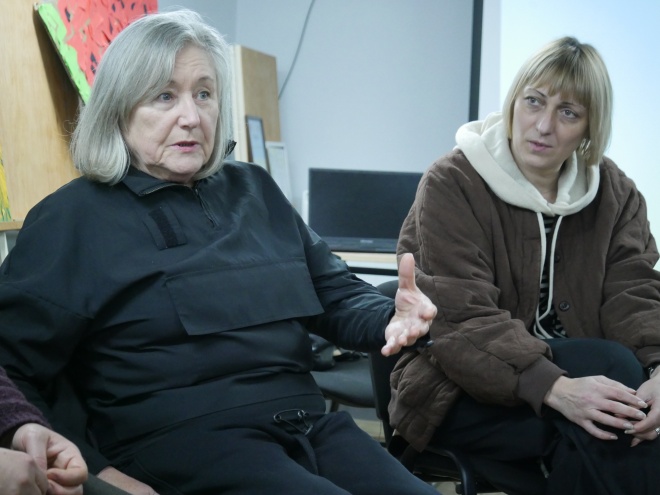 Photo: Discussion on digital security after watching the film My Sextortion Diary, by Ustin Danchuk, Media Platform Vgoru
“Extortion is possible wherever there is fear”
Mykola Baliuk, lawyer at the Centre for Assisting the Rescued:
“When Patricia stopped being afraid of public judgment, the extortionist disappeared. It is a matter of culture: not all societies make sexuality-based extortion possible. Wherever there is censorship and taboo, there is also fear. And young people need to be told: there is nothing shameful in this.”
“It could break anyone”
Tetiana Kozlova, expert on countering gender-based violence:
“While watching the film, I realised: I am also unprotected. And I was struck by the realisation that such a situation could break me. Especially when it concerns one’s career, running for office or taking a new position. A person will think a hundred times about whether to disclose information. And phrases like ‘don’t keep such photos’ are unacceptable. You have the right to privacy.”
“Would it be the same here?”
Iryna Tolstykh, coordinator of the Centre for Assisting the Rescued:
“In the film, no one judged Patricia. Everyone who received her photos simply asked: ‘Are you okay? But would it be like that here?
Schools teach a lot of unnecessary things, yet children do not know how to protect their Telegram channel. And there is a lack of sexual education.”
“We must be safe adults for children”
Svitlana Zabolotna, screening participant:
“A child should not be afraid to come to their parents. If they are afraid, then the problem is not with the children, but with our relationships. We must become safe adults.”
What this film is about — and why it is important today
During the discussion, participants also spoke about other issues:
— the stigma surrounding the female body;
— the fear of turning to the police;
— how extortionists use shame as a weapon.
In the film, Patricia breaks this cycle: she publishes the intimate photos herself, destroying the extortionist’s power. And this very gesture is the key one. Photo: still from the film My Sextortion Diary
“The film made me think about how unprotected we are”
The screening moderator, Ms. Nelli, emphasised:
“I always thought that the photos on my phone were my personal matter. But it turns out they are not. We are defenceless online. And the scariest part is not the photo itself, but society’s reaction. The film showed that our body and our life can cease to belong to us. We must learn to protect ourselves.”
Author: Iryna Bulanenko
The 22nd Travelling Docudays UA is held with the financial support of the European Union, the Embassy of Sweden in Ukraine, and International Media Support. The opinions, conclusions or recommendations do not necessarily correspond to the views of the European Union, the governments or charities of these countries. Responsibility for the content of the publication lies solely on its authors.