Who treats trees? A conversation about community responsibility: Lessons from a Docudays UA tour
Who treats trees? A conversation about community responsibility: Lessons from a Docudays UA tour
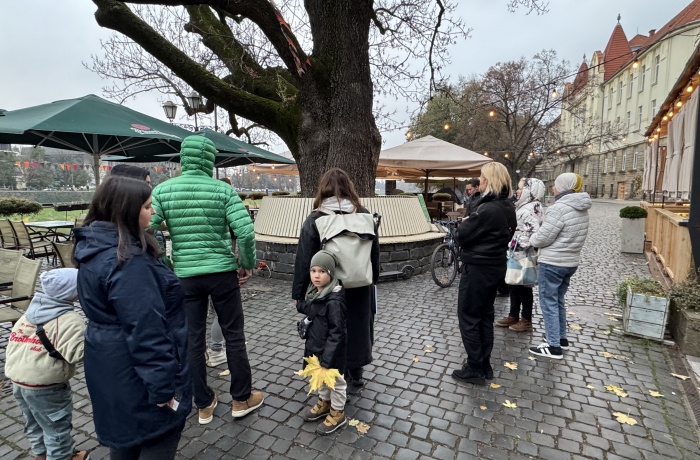
This phrase was said during a tour — and it seemed to have described the most accurately what we saw, felt, and discussed together.
Trees with disabilities.
Trees that have been mutilated.
Trees trying to survive where people decided to “rejuvenate” them with a chainsaw.
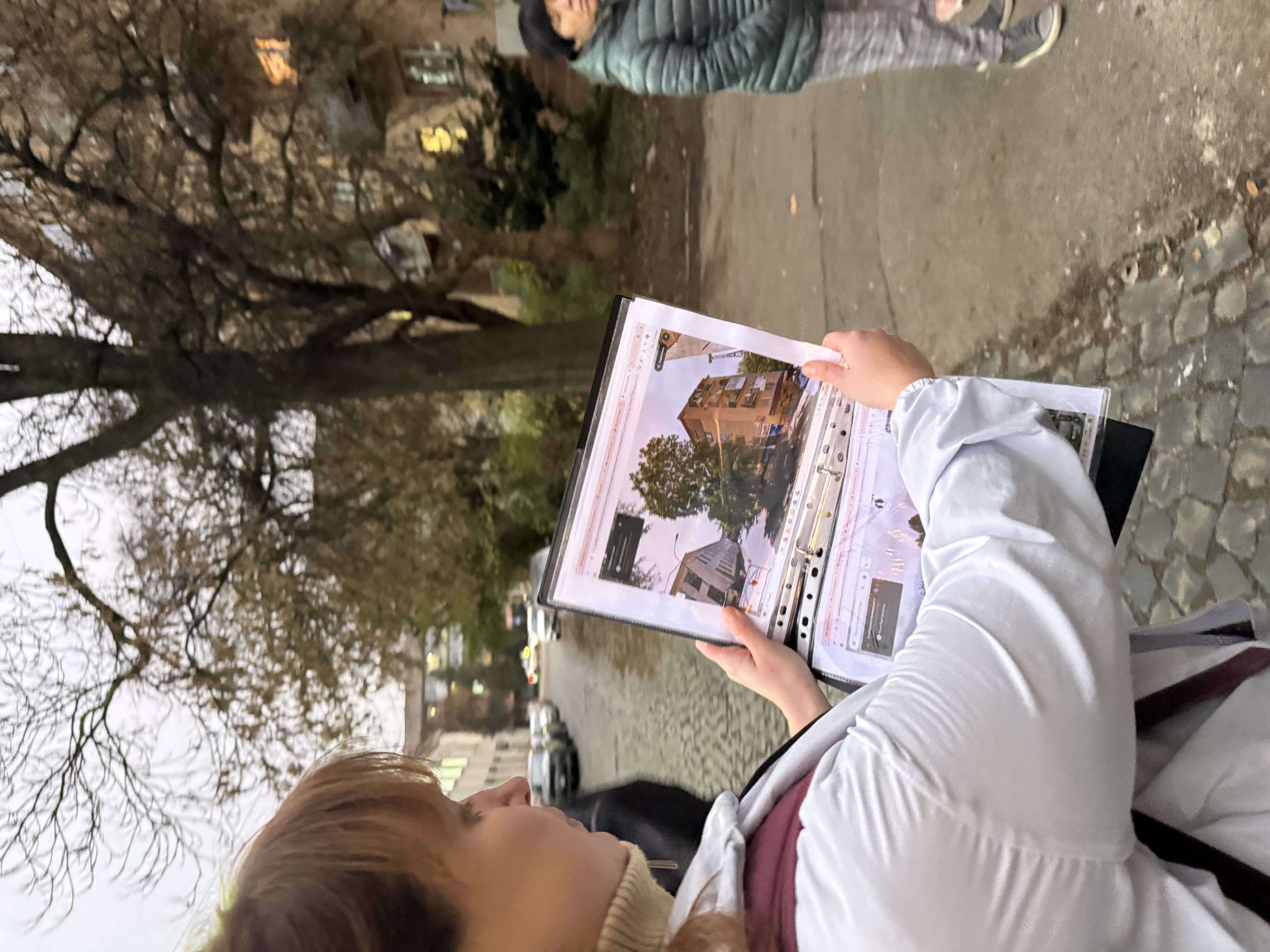 Photo: excursion about nature loss and conservation
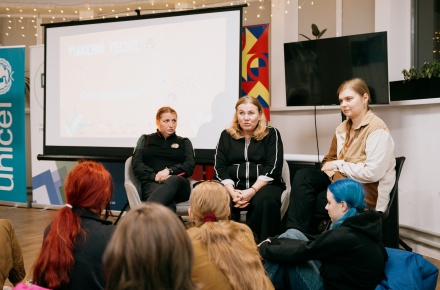
This was exactly what our walk around the city as part of the Travelling Docudays UA turned out to be: honest, painful, and very important. The event was organised by the Urban Trees (Uzhhorod) initiative, NGO Insider Education Centre, and NGO Dream in Action.
The path of pain: From one street to an entire city
The route ran not only along the streets of Uzhhorod, but through stories of loss.
From Independence Embankment to Kyiv Embankment.
From the edible chestnuts near the Linguistic Gymnasium to the mutilated horse chestnuts across the river.
Participants saw with their own eyes the difference between how a tree should look and what it turns into after “crown reduction.”
Amid cut trunks and bare branches, a conversation was born — sincere, expert, and very emotional.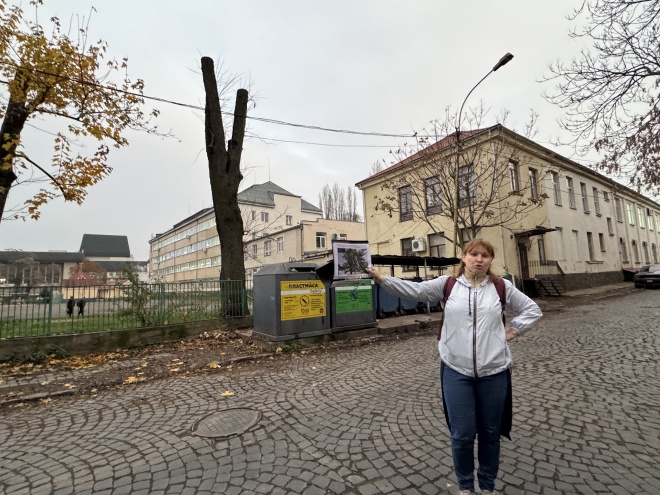
Photo: Activists protesting tree cutting
The arborists and activists Dzvinka Bilonoh and Yevheniia Muchychka spoke about this not as academics but as people who feel the pain:
about water sprouts that drain strength from mutilated trees;
about the fact that “stick cutting” is not rejuvenation, but torture;
about the sophora alley that may disappear very soon;
about the fact that the Sycamore Alley still has not received protected status, despite the community’s request a year and a half ago.
It became clear to everyone: cutting trees is not a technical job, but a great responsibility.
One shared concern
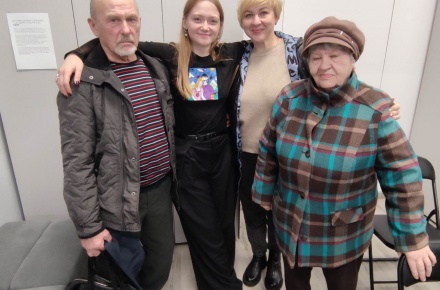
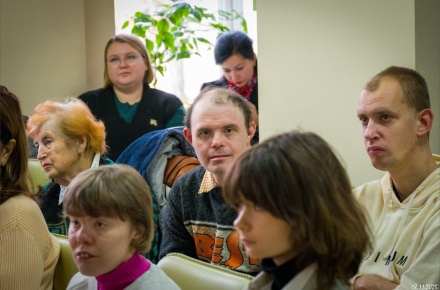
School and university students, parents, scholars, and pensioners attended the event.
When asked, “Why did you come?”, they replied:
“I love Uzhhorod”,
“It hurts me to see the loss of green spaces”,
“I want to find like-minded people”,
“I am afraid that soon nothing will be left”.
Different eras, different occupations, different stories — but one need:
to keep the city alive.
During the tour, the participants spoke about the fact that the city needs arborists rather than “crown cutters”, specialists who heal rather than mutilate.
And, most importantly, about the fact that every resident of Uzhhorod can make an impact:
-
ask questions of municipal workers;
-
demand documents;
-
call the police if they see illegal cutting;
-
not stay silent.
Because a tree is not an obstacle.
A tree is a partner.
Our air conditioner in the heat.
Our protection from noise.
Our rare resource.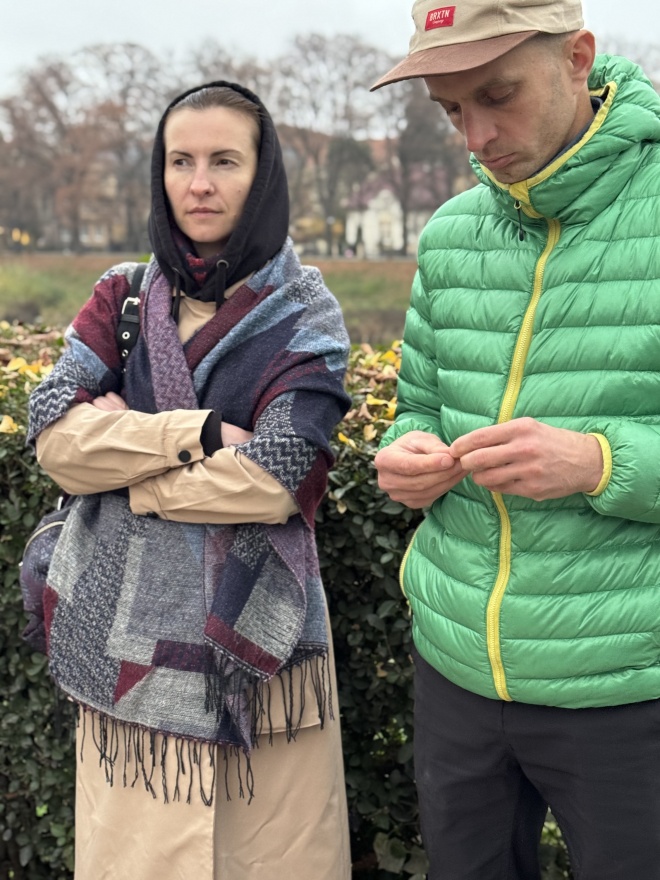 Photo: participants of the excursion
In the feedback after the tour, one phrase was repeated — and it is worth preserving:
“The topic is extremely relevant… I wish you strength to continue the struggle. Include us in it,” wrote Liudmyla Sirobaba.
And this is about the most important thing:
when people see the point and feel involved, they want to act.
Author: Maria Symkovych
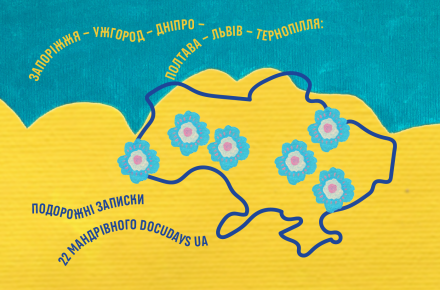
The 22nd Travelling Docudays UA is held with the financial support of the European Union, the Embassy of Sweden in Ukraine, and International Media Support. The opinions, conclusions or recommendations do not necessarily correspond to the views of the European Union, the governments or charities of these countries. Responsibility for the content of the publication lies solely on its authors.