Cry from the darkness of captivity: Lviv screening of Witnesses. Captivity Kills
Cry from the darkness of captivity: Lviv screening of Witnesses. Captivity Kills
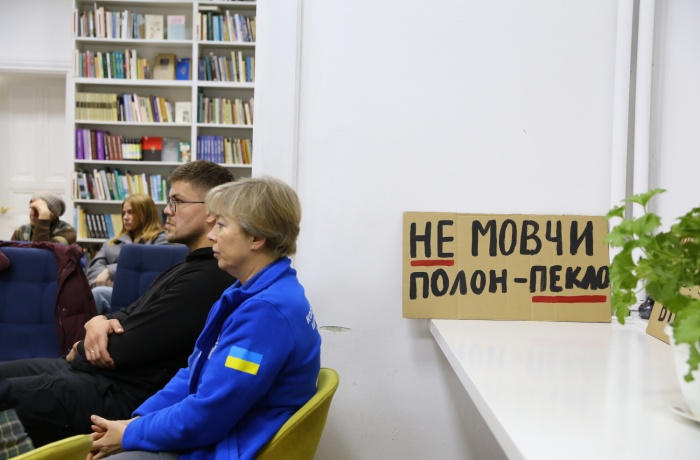
This autumn, the 22nd Travelling Docudays UA took place in Lviv, a human rights documentary film festival that, year after year, brings communities together around important topics and conversations. The theme of 2025 is Rare Resource. As is tradition, the organisers ensured inclusivity: all films featured descriptive subtitles, and three of them also included audio description.
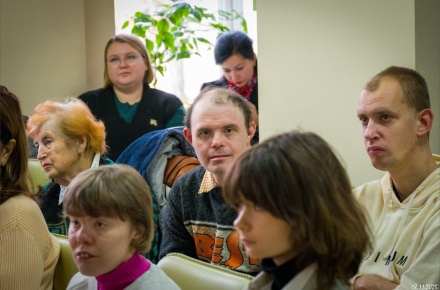
The people of Lviv watched films that not only tell but also preserve stories about dignity, freedom, and the right to life.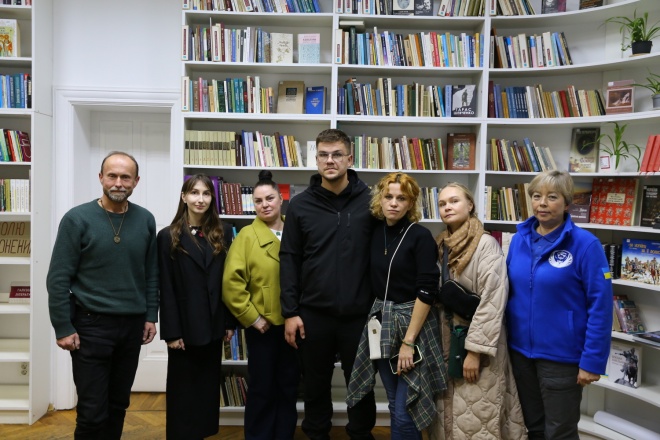 Photo: Audience members at the 22nd Traveling Docudays UA in Lviv
The short Ustyianovycha Street in Lviv. Building number 4, heavy wooden doors with an intercom. A grey entrance hall leads to the cosy space of the URBAN library. White walls, shelves full of books, bright light, and colourful soft chairs. On the wide windowsills, there are potted plants and cardboard protest signs: “Freedom to Prisoners,” “Do Not Be Silent — Captivity Kills,” “Free Mariupol Defenders.”
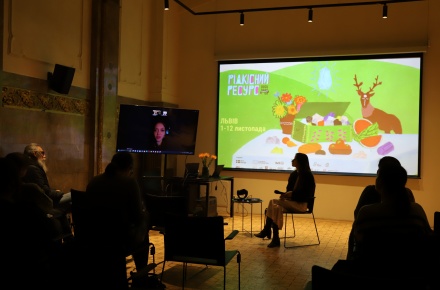
In this atmosphere, the audience gathered to watch the non-competition screening of the RIGHTS NOW! Human Rights Programme film Witnesses. Captivity Kills by directors Maryna Kronhlevska and Tetiana Symon.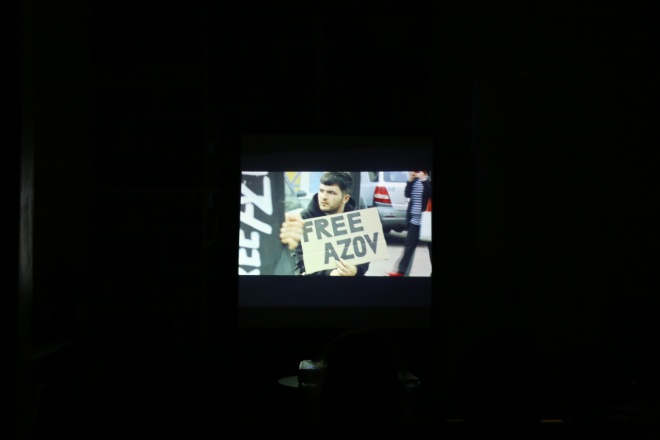 Photo: watching the film Witnesses. Captivity Kills
The first scenes show the Free Azov rallies. A drone flies over a sea of cardboard signs, and the crowd shouts: “Do not be silent — captivity kills!”
Then — a sharp transition. Vertical videos, like Instagram Stories, showing the defense of Mariupol. Filmed on phones for their loved ones, for those who were waiting. The soldiers share their emotions, speak as things are — unfiltered, with fear, with humor. The screen shows ruins, Azovstal, fragments of life from the spring of 2022.
“Mom, we are armed to the teeth. And I never heard my son’s voice again. Only messages on Telegram,” says one of the film’s protagonists, the mother of a prisoner of war whom she is still waiting for.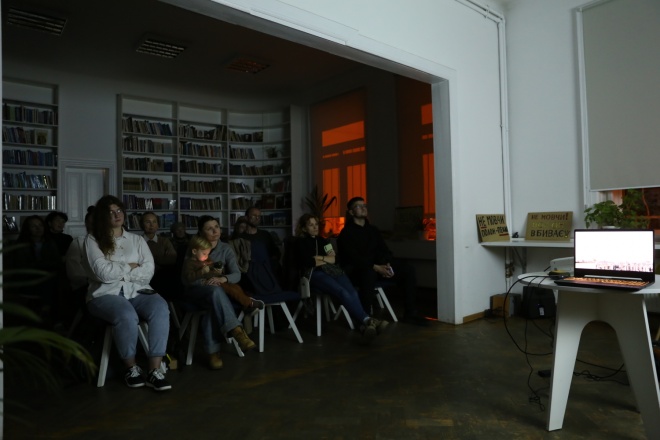
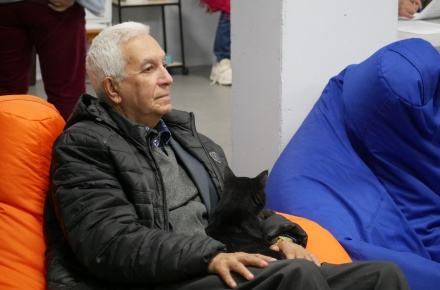
Photo: watching the film Witnesses. Captivity Kills
The film collected the testimonies of the defenders of Mariupol, some of whom ended up in the Olenivka colony. It also includes the voices of the mothers and wives of those still held in Russian captivity.
The film is not only about atrocities. It is also about friendship, daily life, love, and even an online marriage — long before this feature appeared in Diia.
Over the course of 45 minutes, the hall was filled with heavy sighs, tears, and long pauses of silence.
The festival as a platform for conversation
The festival’s regional coordinator in Lviv, Vira Karpinska, emphasises:
“The value of documentary cinema lies in the fact that it raises a great many questions. And we want everyone to be able to ask these questions, in big cities as well as in the smallest villages.”
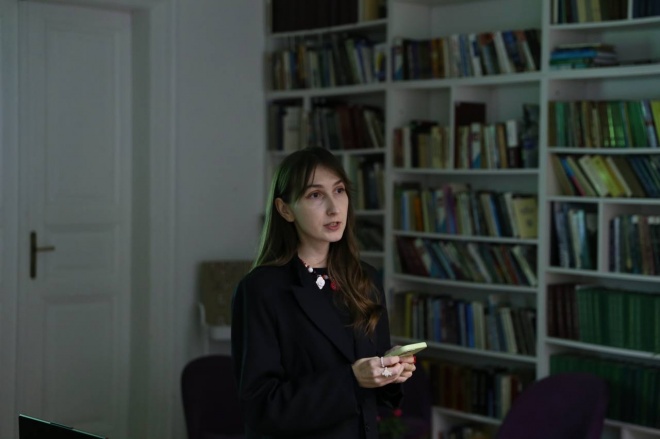 Photo: Regional coordinator of the festival in Lviv, Vira Karpinska
That is precisely why Travelling Docudays UA tours across Ukraine — this year, the festival visited 19 localities. Every screening is followed by a discussion.
“We are creating a space where people can talk about human rights and look for answers. Cinema is a tool for this,” Vira adds.
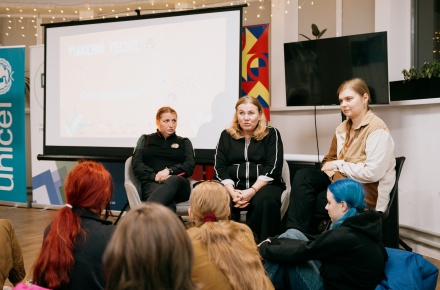
After the screening of Witnesses, an open conversation began, moderated by Vasyl Kmet, Director of the Lviv Municipal Library. Among the guests were journalists, human rights advocates, families of prisoners, and former prisoners of war.
Document crimes, preserve memory
Olya Pilishchuk, Head of the Memorial Memory Platform, said that the website already features the stories of more than 11,000 military service members, civilians, and children.
“We have more testimonies, but not everything can be published for security reasons. Yet documenting them is vital.”
Journalist Hanna Kurtsanovska, co-author of the book Olenivka. Crime. Memory. A Broken System, joined the conversation online. In the Memory section, she gathered the stories of 48 people killed in Barrack No. 200.
“The book is not evidence for a court. But it is a legacy for future generations, who must know the truth and call the torturers what they are: torturers.”
“Society must shout about captivity”
Nadiia Khai, the mother of a prisoner of war from Azovstal, shared her story. Her son was wounded, lost some of his toes, and was taken captive — she learned about this from Russian sources.
“Former prisoners are my only source of information. But what hurts the most is indifference. Few people come to the rallies. We need those who will shout about captivity.”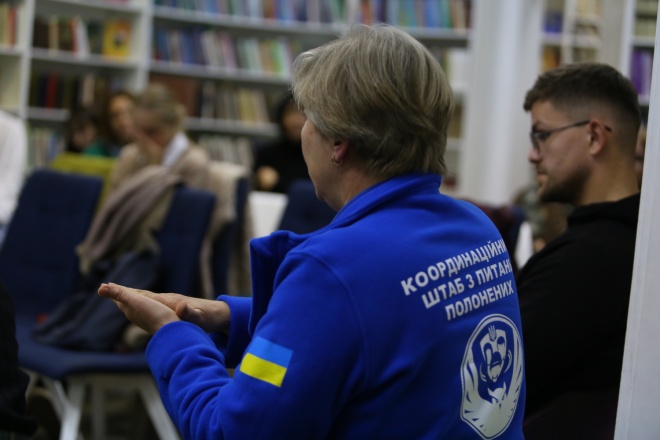 Photo: Vlastymyra Shkrybalo, representative of the Coordination Headquarters
Attorney Vlastymyra Shkrybalo, a representative of the Coordination Headquarters, explained that the government is working to support families and those released, but:
“All mechanisms depend on the people who have to implement them. We lack an engaged society.”
“Love for your country is not about slogans”
Maksym “Roger” Levchenko, a former prisoner of war, a protagonist of the film, and the founder of the veteran project StrikeX, also joined the discussion.
“If you’re not fighting, you can help in other ways. Find military service members and ask: ‘What do you need? How can I be useful?’ Slogans are good, but they save no one.”
The 22nd Travelling Docudays UA is held with the financial support of the European Union, the Embassy of Sweden in Ukraine, and International Media Support. The opinions, conclusions or recommendations do not necessarily correspond to the views of the European Union, the governments or charities of these countries. Responsibility for the content of the publication lies solely on its authors.