Travelling Docudays UA in Ternopil: Films and discussions about justice and responsibility
Travelling Docudays UA in Ternopil: Films and discussions about justice and responsibility
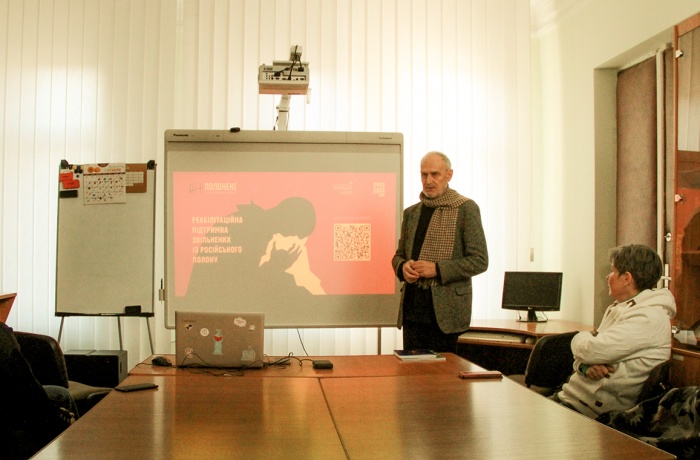
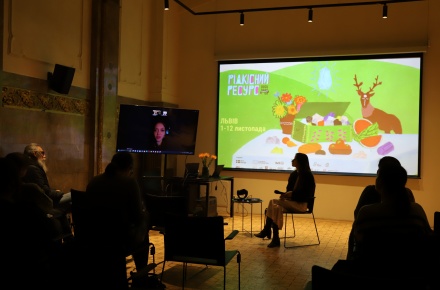
At the Ternopil Regional Universal Science Library, as part of the 22nd Travelling Docudays UA International Human Rights Documentary Film Festival, a special presentation Fiat iustitia! – Let Justice Be Done! took place. The event was dedicated to the historic judgment of the Grand Chamber of the European Court of Human Rights (ECHR) in the case Ukraine and the Netherlands v. the Russian Federation, delivered on 9 July 2025.
This ruling is already being called one of the most significant in the history of the ECHR. The Court found Russia responsible for the downing of flight MH17, as well as for violations of Articles 2, 3, and 13 of the European Convention on Human Rights: the right to life, the prohibition of inhumane treatment, and the right to an effective remedy.
The presentation drew considerable interest from students and professors of the Law Department at the Western Ukrainian National University. The participants discussed not only the legal implications of the decision but also its human dimension: accountability, justice, and memory.
Films about memory and human dignity
After the presentation, the audience watched the documentary My Sweet Child by director Maarten de Schutter. The film tells the story of the author’s mother, a human rights advocate and activist who was killed when the MH17 plane was shot down by the Russian military in 2014.
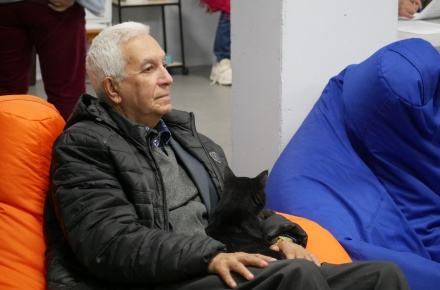
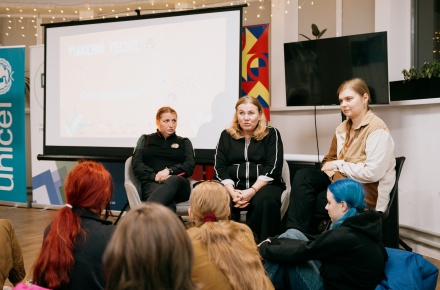
This story is personal. Yet it stands as a universal testimony to loss, love, and the need to remember. Following the screening, a discussion took place on the impact of war crimes on the lives of civilians and the role of documentary cinema in preserving the truth.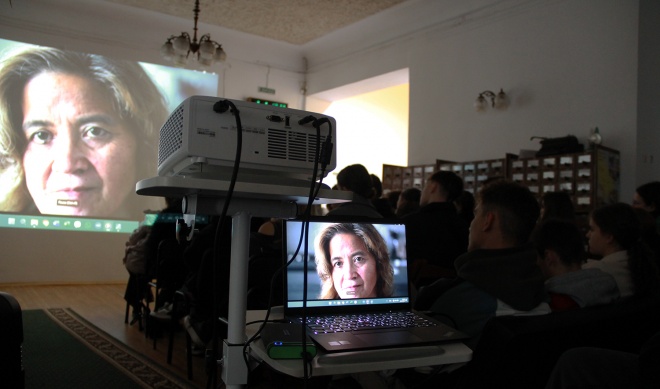 Photo: watching a movie My Dear Child
Fiume O Morte: The story of a city and the responsibility of culture
In the evening part of the programme, festival participants watched the film Fiume O Morte! by Croatian director Igor Bezinović, who was born in the city of Rijeka, formerly known as Fiume.
The film, awarded at the Rotterdam Film Festival, combines historical reconstruction with documentary testimonies from the city’s residents. They reinterpret the events of 1919, when the poet Gabriele D’Annunzio proclaimed a short-lived autocratic state in Fiume, a precursor to Mussolini’s fascist regime.
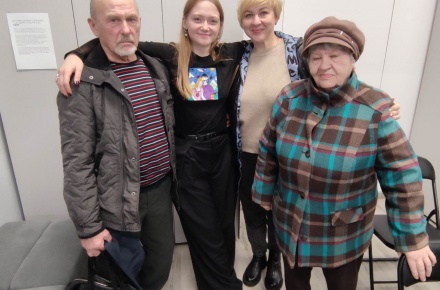
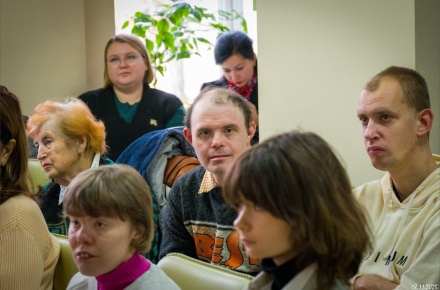
The film explores how culture can serve both as inspiration and as a justification for dictatorship.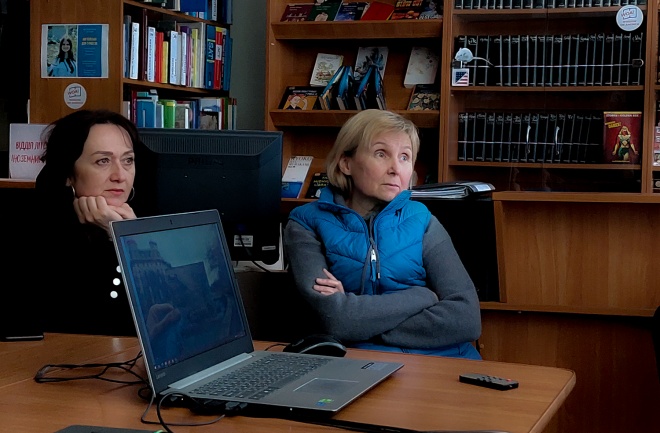 Photo: discussion of the film Fiume O Morte!
“The film reveals the complex ties between art and politics, showing how an artist’s popularity can be used to legitimise lawlessness. At the same time, it invites reflection on nationalism, memory, and human dignity,” shared student Maryana Darmohrai.
“This is not a typical historical film: it is at times heavy, but incredibly honest. It makes you think that history is not only what is written in textbooks, but also what lives in our consciousness,” added Yuliia Hrad, a law student.
During the discussion, participants drew parallels between the history of Fiume and the events of the 20th century in Ukrainian cities: Lviv, Ivano-Frankivsk, Ternopil. Just like in Rijeka, borders, governments, and flags changed repeatedly here.
On humanity, society, and shared memory
Concluding the discussion, participants recalled the words of Austrian psychologist Wilhelm Reich from his book The Mass Psychology of Fascism:
“‘[F]ascism’ is not the act of a Hitler or a Mussolini, but [...] the expression of the irrational structure of mass man.”
These words, like the scenes of the film, served as a reminder that any society can find itself on the brink if it forgets about dignity, culture, rights, and law.
Author: Oleksandr Stepanenko
The 22nd Travelling Docudays UA is held with the financial support of the European Union, the Embassy of Sweden in Ukraine, and International Media Support. The opinions, conclusions or recommendations do not necessarily correspond to the views of the European Union, the governments or charities of these countries. Responsibility for the content of the publication lies solely on its authors.