Between cinema and reality: How the film Where’s My Body Armor? helped the youth of Chernivtsi to discover new questions
Between cinema and reality: How the film Where’s My Body Armor? helped the youth of Chernivtsi to discover new questions
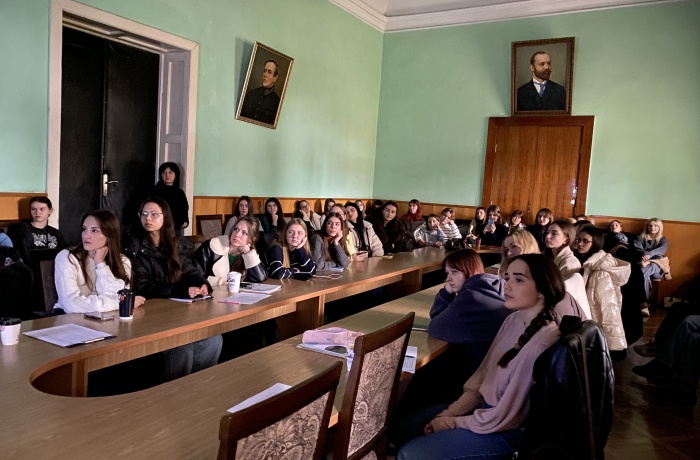
Students of the Department of History, Political Science, and International Relations of the Yurii Fedkovych Chernivtsi National University, within the 22nd Travelling Docudays UA International Human Rights Documentary Film Festival, joined the screening of Daria Penkova’s film Where’s My Body Armor?. The short film by the young Ukrainian director became a reason for a sincere and very emotional conversation about war, loss, human weaknesses and strengths.
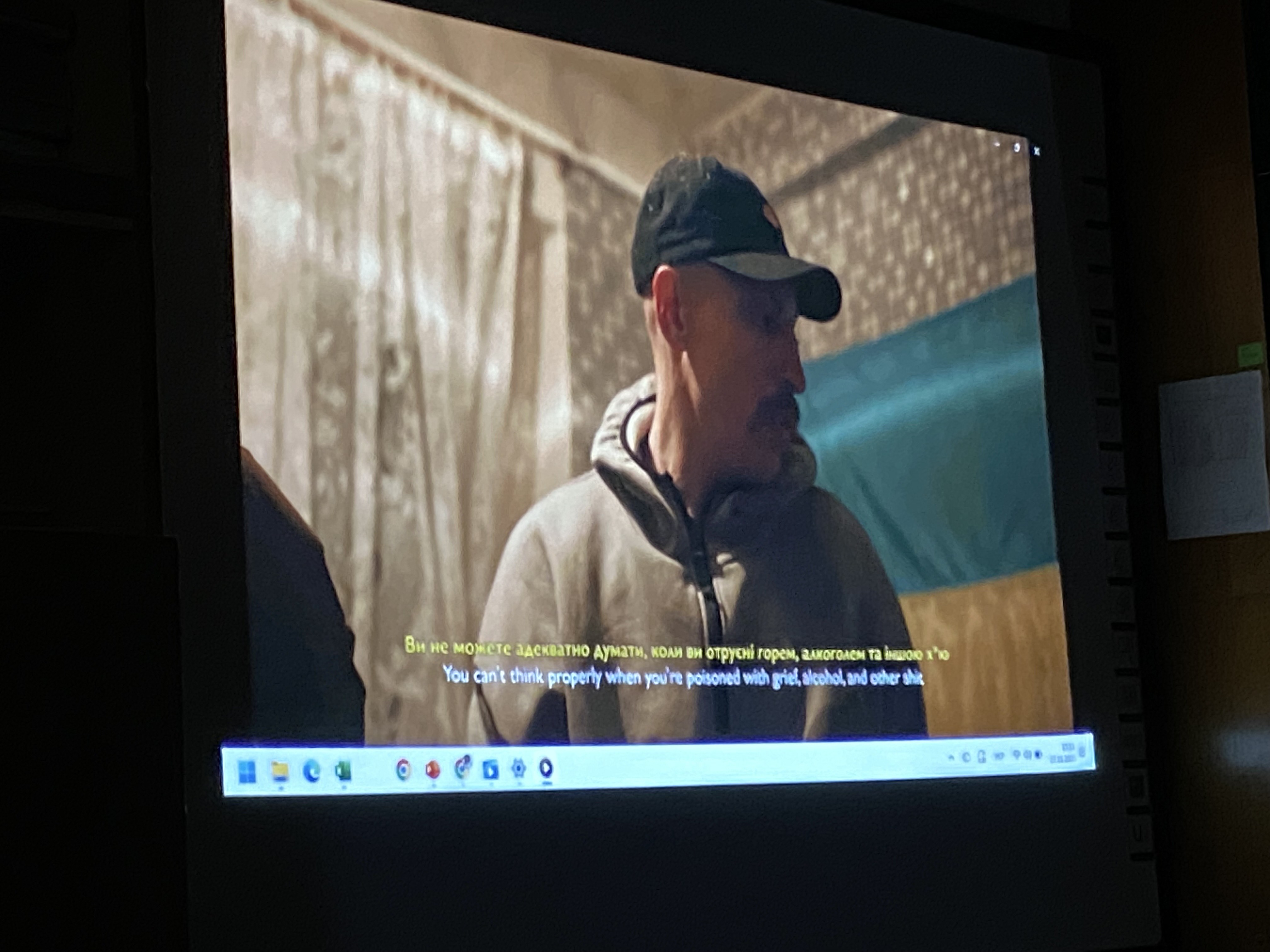 Photo: still from the film Where’s My Body Armor?
A post-film conversation that changes your perspective
The screening was followed by an expert discussion with Nataliia Nechaieva-Yuriichuk, PhD in History and Associate Professor of the Department of Political Science and Public Administration at CNU. It was she who set the tone of the conversation: attentive, precise, and sensitive to the themes raised in the film.
The students spoke about the meaning of the phrase “rare resource” — in the film, in life, during the war. They shared how their values have changed over the past two years and whether a conversation about “normality” is even possible today.
A separate topic was the need for an honest representation of military personnel on screen. Should they be shown without embellishment, without a heroic halo, through simple human stories? Most participants of the discussion agreed: yes. It is precisely these non-stereotypical, vulnerable stories that restore our understanding that behind the label “soldier” stands a person with their own fears, mistakes, and love.
“They are just like us — they have simply taken on more”
The young people noted Penkova’s unconventional directorial approach: openness, documentary authenticity, and the absence of “gloss” made it possible to see the military not as symbols, but as people.
It was precisely this “non-heroicised truthfulness” that resonated the most. The students admitted: this perspective does not diminish the feat — on the contrary, it makes it even deeper and more understandable.
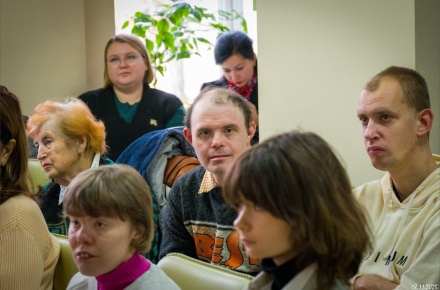
They also paid attention to the emotional line of the film: the affection that arises between the main characters. Many wondered: what happened next? Did their story continue behind the scenes? This testified to the essential point: the film left no-one indifferent.
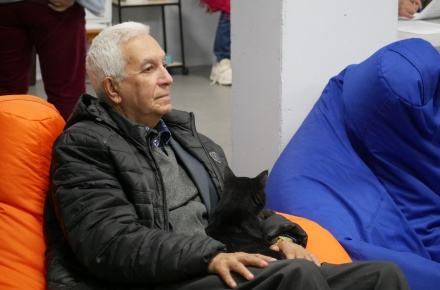
Photo: emotions while watching a film
Is peace possible without justice?
One of the key questions of the discussion was also “justice as a condition for peace”. Can we speak of ending the war without a proper assessment of the crimes, without honestly voicing the pain, without accountability?
The students actively joined in the reflections, sharing personal examples and observations. For many, this conversation became their first experience of a deep discussion of a film not only as an artistic work, but also as a tool for reflection and self-awareness.
All those present noted: the film and the discussion left a sense of the importance of dialogue — about the war, about the people on the frontline, about ourselves.
The 22nd Travelling Docudays UA is held with the financial support of the European Union, the Embassy of Sweden in Ukraine, and International Media Support. The opinions, conclusions or recommendations do not necessarily correspond to the views of the European Union, the governments or charities of these countries. Responsibility for the content of the publication lies solely on its authors.