From сonsultations to trust: The path of participation in Kropyvnytskyi
From сonsultations to trust: The path of participation in Kropyvnytskyi
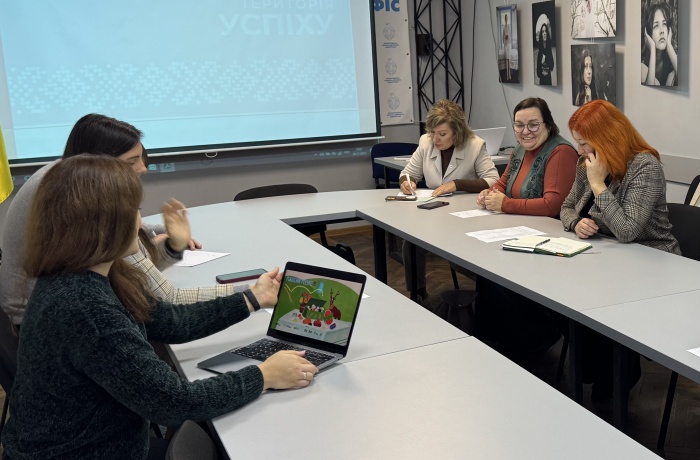
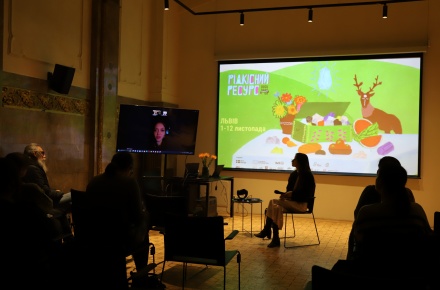
In Kropyvnytskyi, a roundtable titled Participatory Approaches in Local Policy took place, an event of the human rights program of the 22nd Travelling Docudays UA International Human Rights Documentary Film Festival. The roundtable brought together experts as well as representatives of local authorities and civil society organizations to discuss how resident participation can transform local policy, making it more transparent, accountable, and aligned with the real needs of people.
Participatory approaches as a realisation of human rights
The first thematic block was opened by Halyna Luhova, a representative of the Ombudsman’s Office in the Kirovohrad Region. She stressed that participation in decision-making is a key civil right:
“Participation means involving citizens in decision-making. The Ombudsman’s Office organizes public consultations, discussions, and conducts awareness-raising campaigns. It is important that decisions are not made from the top down.”
Such an understanding of participation — as a tool of influence rather than a formality — forms the foundation of modern democratic interaction.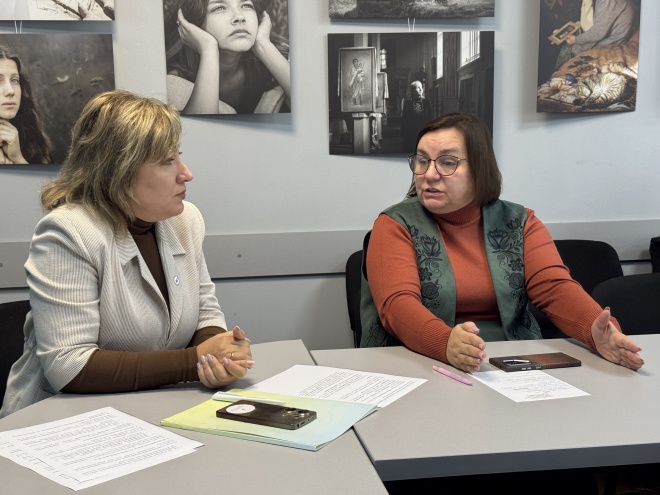
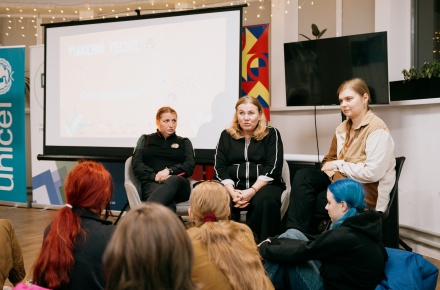
Photo: Galina Lugova, representative of the Ombudsman's Office in Kirovohrad region, Inga Dudnik, executive director of the NGO “Territory of Success”, by Hennadii Zorin
How participation shapes local policies
The discussion was continued by Inha Dudnik, Executive Director of NGO Territory of Success. She stressed that local policy is impossible without accessibility, transparency, and accountability:
“Local policy must be built on the principles of accessibility, independence, respect for all agents of interaction, accountability, and transparency. A prominent example is the creation of the Kirovohradshchyna.1325 Coalition, which works on the implementation of UN Security Council Resolution 1325 on Women, Peace, and Security.”
This experience demonstrates how partnerships between authorities, civil society, experts, and educational institutions create stronger and more sustainable solutions.
Best practices: When participation becomes the norm
In the third block, the participants presented specific cases already functioning in the city and the region.
Dmytro Kobzar, Chief Specialist of the Public Communications Department of the Kropyvnytskyi City Council, shared the experience of working together on the Regulations on Public Consultations:
“A working group was created that brought together specialists from the City Council and representatives of civil society organisations. Over the course of five months, we developed the Regulations on Conducting Public Consultations.”
This is an example of how joint work between different parties creates clear rules and ensures the predictability of government decisions.
Amina Kozyn, Chief Specialist at the Youth and Sports Department of the Kirovohrad Regional Military Administration, spoke about the role of youth councils:
“Youth councils are a platform for dialogue between the authorities and the community, a means of taking young people’s opinions into account when shaping local policy.”
Here, participation is an investment in the community’s future, where young people have a real voice and the ability to influence decisions. Photo: Amina Kozin, chief specialist of the Youth and Sports Department of the Kirovohrad Regional State Administration, Iryna Tkachenko, manager of the NGO “Skyscraper Sustainable Development Agency,” by Hennadii Zorin
Iryna Tkachenko, Manager at NGO Skyscraper Sustainable Development Agency, drew attention to development and resilience programs that help communities adapt to challenges.
Inna Zholobova, Head of the Diia.Kropyvnytskyi Association of Ukrainian Women, shared the results of their work in the field of toponymic policy:
“When renaming the city’s streets, more than 30 toponyms were given women’s names.”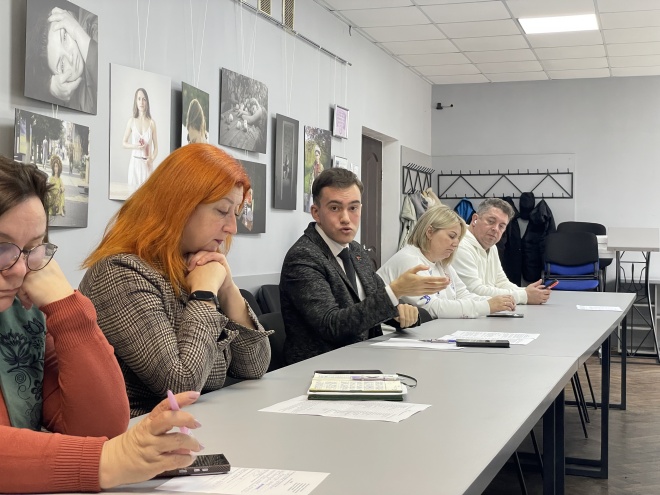 Photo: Inna Zholobova, chairwoman of the Ukrainian Women's Association “Dія.” Kropyvnytskyi, Dmytro Kobzar, chief specialist of the public communications department of the Kropyvnytskyi City Council, by Hennadii Zorin
This case shows how community participation transforms public space and makes visible those who had remained unseen for decades.
Discussion: Why participation is not an event but a culture
The final discussion focused on how to turn one-off practices into a permanent culture of interaction between authorities and the community. The roundtable participants stressed that participation is not about a single tool or a separate event — it is a way of thinking and building relationships.
It is about trust, openness, and willingness to listen to one another. About the fact that sustainable solutions emerge where authorities work together with the community, not instead of it.
Author: Maryna Zorina
The 22nd Travelling Docudays UA is held with the financial support of the European Union, the Embassy of Sweden in Ukraine, and International Media Support. The opinions, conclusions or recommendations do not necessarily correspond to the views of the European Union, the governments or charities of these countries. Responsibility for the content of the publication lies solely on its authors.