From a summer under sirens to digital threats: Travelling Docudays UA continues the dialogue in Zaporizhzhia
From a summer under sirens to digital threats: Travelling Docudays UA continues the dialogue in Zaporizhzhia
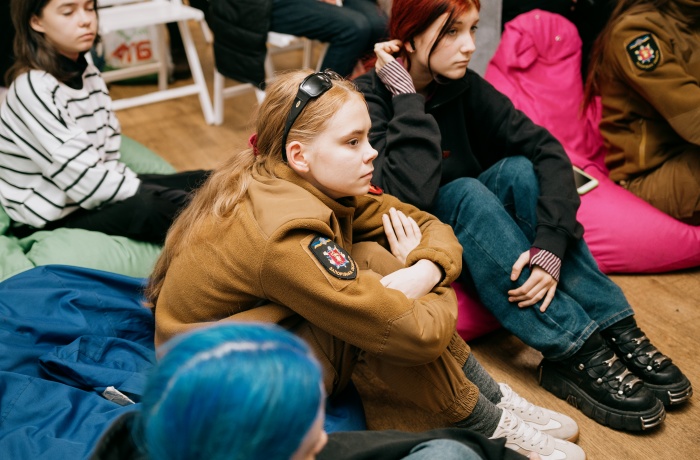
In Zaporizhzhia, screenings of the Travelling Docudays UA Human Rights Documentary Film Festival took place. Teenagers, parents, educators, and experts gathered at the events to watch films together and speak about topics that often remain in the shadows. The atmosphere during the meetings was uniquely trusting: people listened, asked questions, debated, and searched together for words to describe difficult experiences.
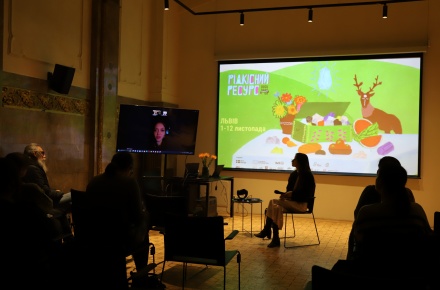
The first film of the festival’s mini-marathon was How I Spent My Summer Holidays? by Antonio Lukich. For viewers in Zaporizhzhia, this screening was more than just watching a film — they recognized familiar places, a school, the rhythms of the start of the academic year that the war has made completely different.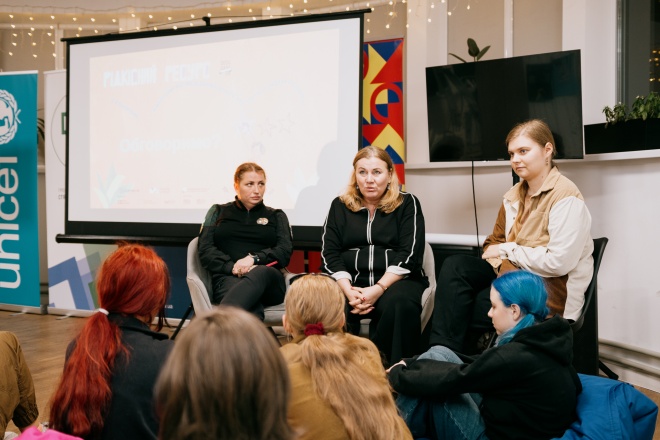 Photo: Post-viewing discussions with experts
Participants noted that the film gained additional weight precisely now, when teenagers’ stories intertwine with the experience of the full-scale war. The film carried a sincerity in which children speak about their pride in their parents who are in the military. This stirred its own wave of emotions, because outside the cinema, on social media, very different and often painful reactions from society can be seen.
“The film restores faith,” viewers shared. “It shows that real life is not like the floods of hate online.”
They also spoke about how summer holidays today are rather memories shaped by anxiety and hope: although there was not much good this summer, everyone dreams of the next one — the one after our victory.
After the screening, an important clarification was voiced by participants: we should speak not only about the children who study during the war, but also about those who will never sit at a school desk again — because they were killed by Russian aggression. This phrase became a painful but necessary emphasis of the evening.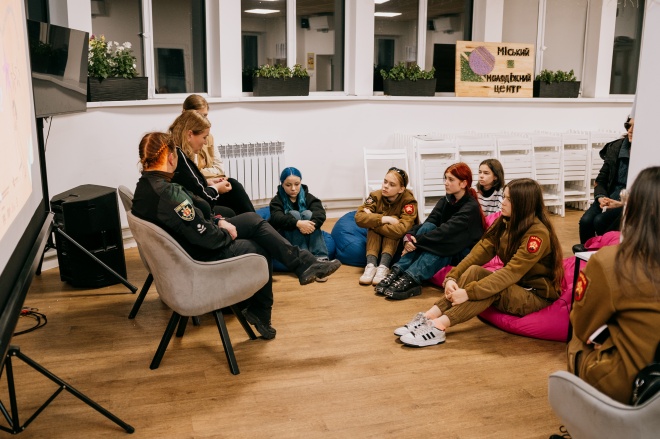 Photo: discussion with cybersecurity experts
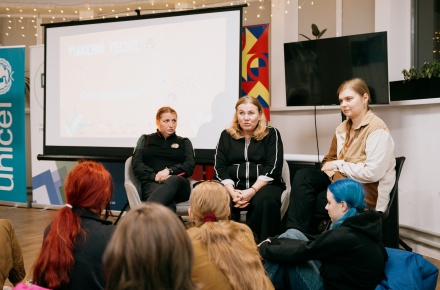
The second screening gathered an even more diverse audience: adults, educators, teenagers. The viewing of My Sextortion Diary was followed by a panel discussion with experts, showing that different generations often see questions of privacy, sexuality, and trust in very different ways.
Members of the older generation remarked: “Don’t send intimate photos — and there will be no problems.” The experts very delicately explained that intimate images shared between partners by mutual consent are a norm of modern relationships. The problem begins where there is violence, blackmail, and especially when this happens within a family. For many, the fear of judgment can be no less traumatic than the violence itself.
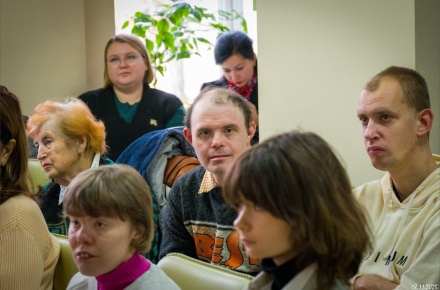
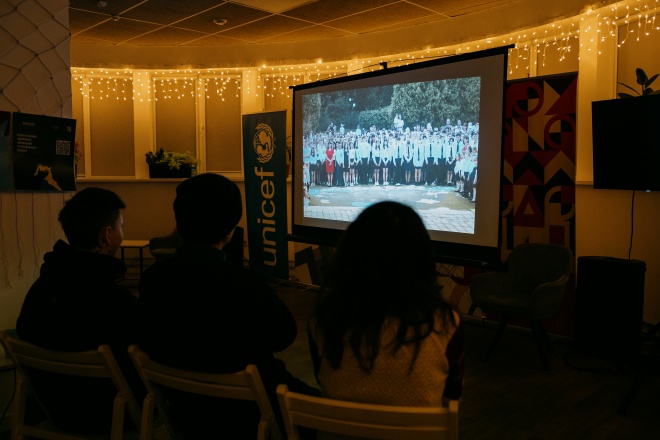 Photo: watching a movie How I Spent My Summer Holidays?
The discussion also raised issues of bullying and shame. Audience members and experts gave examples where psychological pressure related to appearance or one’s “unusualness” caused children to remain silent about other, more serious problems — because they did not expect support.
At the same time, a positive trend was highlighted: in Zaporizhzhia, the number of teenagers’ reports to the police has increased over the past year. This indicates that young people are beginning to trust the system and seek help. But the experts stressed that the police’s capacity to identify cybercriminals is still very limited.
For teenagers, the film was challenging, but its visual approach — the focus on chats, media files, rather than complex interviews — made it more accessible for a first introduction to the topic.
Author: Viktoriia Veres
The 22nd Travelling Docudays UA is held with the financial support of the European Union, the Embassy of Sweden in Ukraine, and International Media Support. The opinions, conclusions or recommendations do not necessarily correspond to the views of the European Union, the governments or charities of these countries. Responsibility for the content of the publication lies solely on its authors.