“I’m trying to forget these three and a half years”: In Kherson, documentary cinema sparked a conversation about captivity, rehabilitation, and hope
“I’m trying to forget these three and a half years”: In Kherson, documentary cinema sparked a conversation about captivity, rehabilitation, and hope
As part of the 22nd Travelling Docudays UA in Kherson region, a special screening of the film Witnesses. Captivity Kills took place, followed by a discussion on supporting those released from russian captivity.
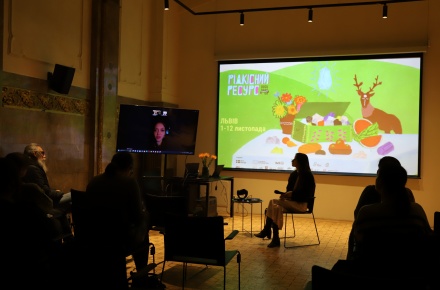
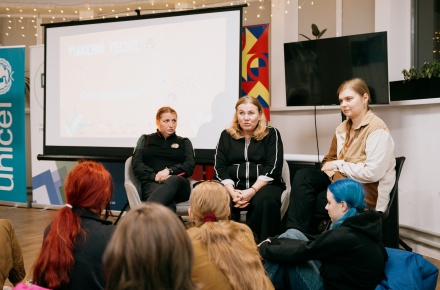
A human rights event took place at the Na Rozi Hub in Kherson as part of the 22nd Travelling Docudays UA International Human Rights Documentary Film Festival. The screening of the film Witnesses. Captivity Kills, created within the Ukraine War Archive project, brought together those who know about captivity not just from the screen: people released from russian torture chambers, human rights advocates, psychologists, representatives of government structures, and relatives of those still in captivity.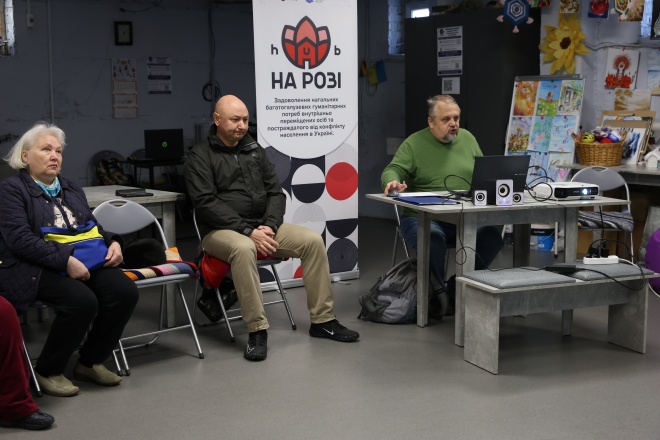
Photo: Screening and discussion of the film Witnesses. Captivity Kills at the Na Rozi hub in Kherson, author Oleksandr Andriushchenko, Vgoru Media Platform
The event was organised by NGO IRC Legal Space. It was held in a hybrid format, both offline and online, which made it possible for more people from different regions of Ukraine to join the screening.
“We must be prepared to help”
The film by directors Tetiana Symon and Maryna Roshchyna tells the story of the tragic events at Colony No. 120 in occupied Olenivka, the site where, on the night of 28–29 July 2022, the russian military destroyed a barrack holding Ukrainian prisoners of war. More than 50 defenders of Azovstal were killed, and over 140 were injured.
After the screening, which left a powerful emotional impact, the hall fell silent. It took several minutes before participants could begin to speak — about trauma, recovery, and the state’s responsibility toward its people.
“We consciously dared to hold this event,” said Nataliia Bimbiraite, regional coordinator of the 22nd Travelling Docudays UA in the Kherson Region and director of NGO Legal Space. “Thousands of our compatriots, both military and civilians, are still in captivity. We must be prepared not only to await their release but also to provide conditions for rehabilitation and reintegration after their return.”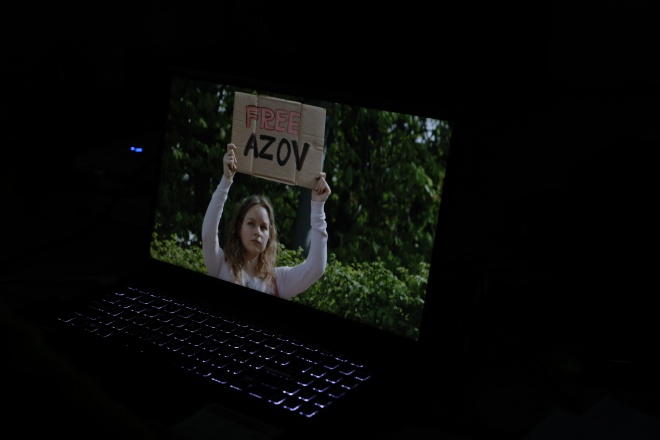 Photo: screening of the film “Witnesses. Captivity Kills” at the Kherson hub “Na Rozi” (On the Corner), author Oleksandr Andriushchenko, Vgoru Media Platform
On supporting those who have returned
During the discussion, the speakers emphasised that the journey of those released only begins after their return. They face not only the consequences of torture but also imperfect legislation and bureaucratic obstacles.
“Our task is to help them go through this legal process with as little trauma as possible, and to coordinate psychological, legal, and social assistance,” said Larysa Ivaniuk, a representative of the Coordination Centre for the Support of Victims and Witnesses under the Office of the Prosecutor General.
According to her, the structure currently supports more than three thousand people, including civilian women, children, and men who have become victims of russia’s war crimes. The centres operate in nine regions, including the Kherson Region.
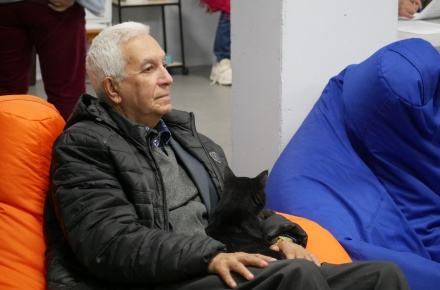
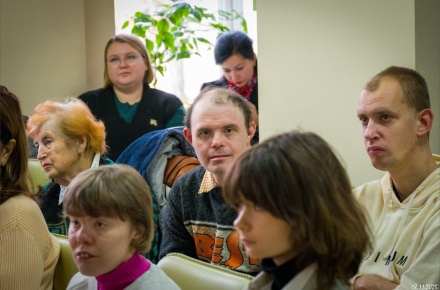
However, in practice, not all released people feel this support. One of the participants, Oleksandr Diakov, a former civilian prisoner held by the russian military for 17 days during the occupation of Kherson, shared that he still does not even know his procedural status in the case.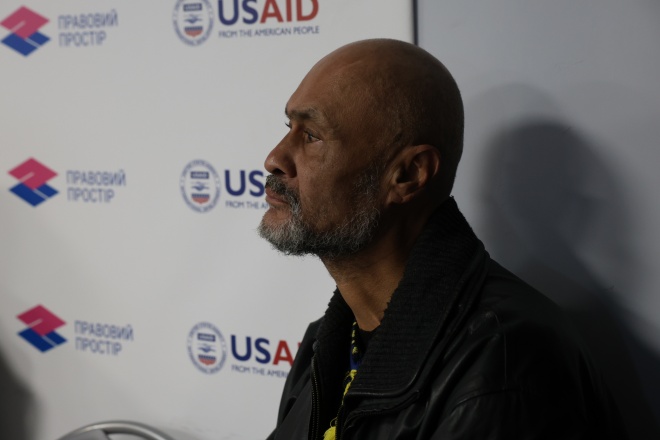 Photo: author Oleksandr Andriushchenko, Vgoru Media Platform
Problems with status: “Not every prisoner of war is officially recognised”
Lawyer Olesia Chavurska (East SOS Charity Foundation) noted that obtaining the status of a civilian prisoner in Ukraine is extremely difficult, especially for those released outside official exchange processes. The commission under the Ukrainian Ministry for the Development of Communities and Territories, which reviews such cases, often issues refusals even when witnesses or documents are provided.
“The law does not contain a clear list of required documents, and after being denied, people are not even told what to add in order to obtain the status. This must be changed at the legislative level,” the human rights advocate emphasised.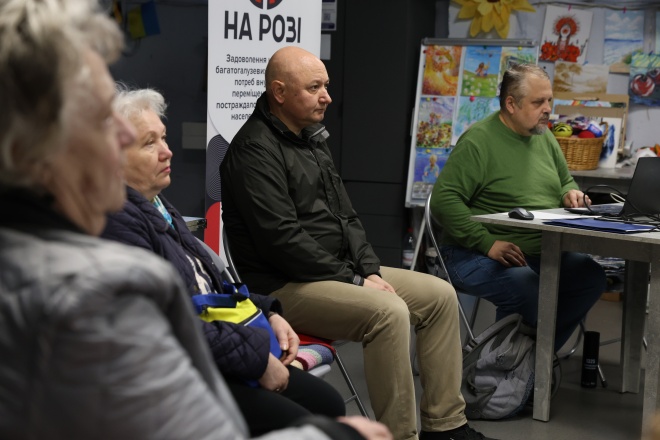 Photo: Discussion of the film Witnesses. Captivity Kills at the Na Rozi hub in Kherson, author Oleksandr Andriushchenko, Vgoru Media Platform
Event participants confirmed that even officially exchanged prisoners sometimes do not receive confirmation of their status. Without it, people cannot claim state-guaranteed assistance, while the cost of medical treatment after torture can reach tens of thousands of hryvnias.
“I’m trying to forget these three and a half years”
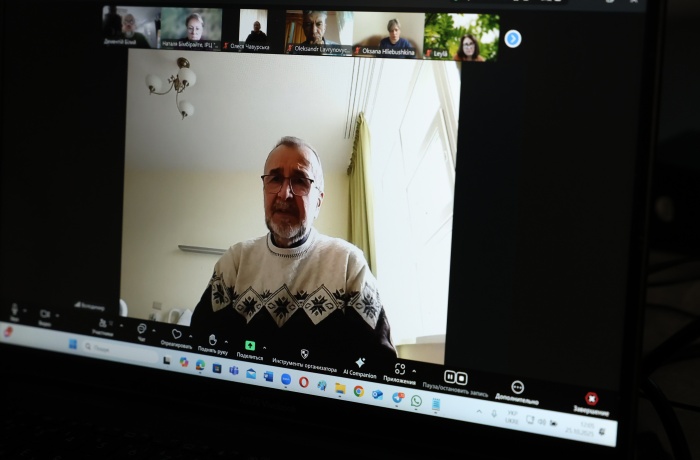
A particularly moving moment was the speech by Volodymyr Mykolayenko, Mayor of Kherson (2014–2020), who spent three and a half years in russian captivity and was released on 24 August 2025.
“I am trying to erase those years of torture and humiliation from my memory. But it is even harder to think about those who are still there. Next to me was a young man who wasn’t released during the exchange. And only recently did I learn that he has also been freed. It’s a great joy — but there must be many more such stories,” shared Volodymyr Mykolayenko.
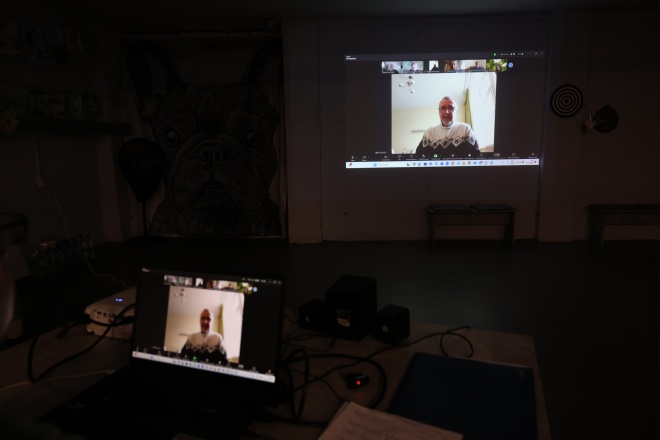 Photo: Volodymyr Mykolayenko, Mayor of Kherson (2014–2020), Oleksandr Andriushchenko, Vgoru Media Platform
Mykolayenko emphasised that society must support not only those who have been released but also the families of those still waiting for their loved ones to return.
Films that do not let us forget
In Kherson, the film Witnesses. Captivity Kills became not just a screening, but an act of testimony — about crimes that continue and about the strength of those who endured captivity and did not break.
“When we watch this film, we do not simply empathise. We take on the responsibility to remember and to act,” concluded Nataliia Bimbiraite.
A video recording of the event can be found on the Travelling Docudays UA / Kherson and the Region Facebook page.
Author: Iryna Ukhvarina
The 22nd Travelling Docudays UA is held with the financial support of the European Union, the Embassy of Sweden in Ukraine, and International Media Support. The opinions, conclusions or recommendations do not necessarily correspond to the views of the European Union, the governments or charities of these countries. Responsibility for the content of the publication lies solely on its authors.