Inclusion and accessibility: How Travelling Docudays UA in the Poltava Region brought the festival closer to everyone
Inclusion and accessibility: How Travelling Docudays UA in the Poltava Region brought the festival closer to everyone
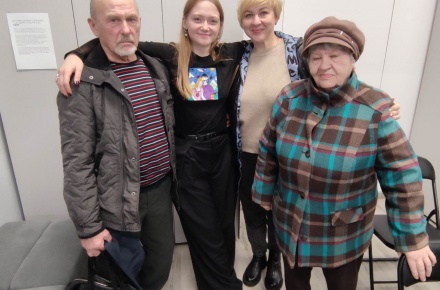
This year, the Docudays UA Travelling Festival in the Poltava Region became, without exaggeration, the most inclusive in its entire history. The organisers set an ambitious goal — not only to hold screenings, but to make them accessible to the widest possible audience: people with hearing and visual impairments, people with mental disabilities, older people, and young audiences who are only learning how to perceive the diversity of society.
And, importantly, inclusion this year was not limited to the film selection or to creating comfortable conditions. It became a living process of interaction, dialogue, and collective search for the answer to a key question: what should a festival be like if it strives to be accessible to everyone, without exception?
Inclusion is not a declaration, but a principle
For the first time, the Travelling Festival in the Poltava Region demonstrated such a wide range of adapted screenings.
Films for people with visual impairments were accompanied by audio description, while screenings for audiences with hearing impairments featured extended subtitles. All events took place only in locations with ramps, convenient access, and barrier-free spaces.
Yet the most valuable aspect was something else: the organisers continuously listened to feedback from the participants themselves.
For instance, during one screening for people with hearing impairments, viewers pointed out that although the subtitles were extended, their size was too small for older people who also have visual difficulties.
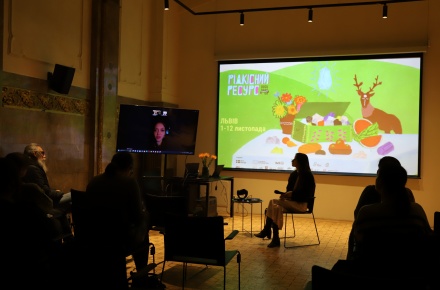
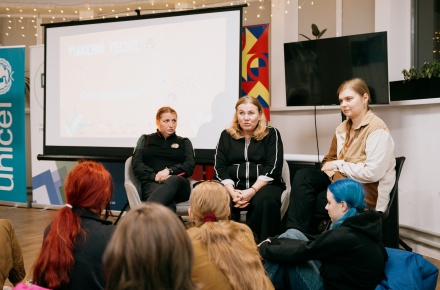
This simple but crucial observation became yet another confirmation: the best accessibility consultants are those for whom accessibility is being created.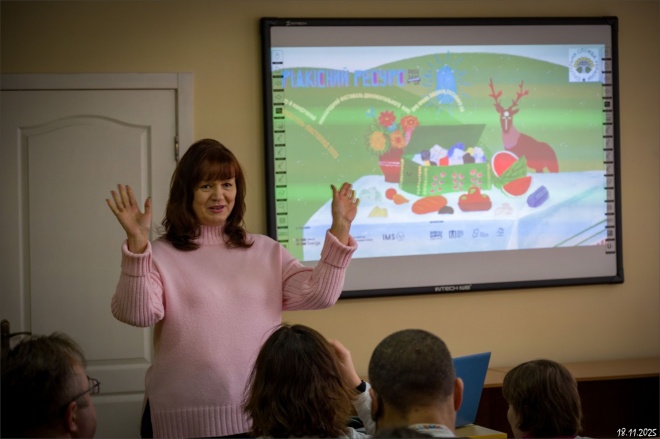 Photo: Important conversations and discussions about inclusion and accessibility
Partnership that reinforced the festival
One of the key decisions this year was the partnership with the Inclusive InfoHub space, which operates at the I. Kotliarevskyi Regional Universal Science Library in Poltava. This was the venue for the festival opening and the key adapted screenings held as part of the Step Towards School of Inclusive Communication.
And this is not just a convenient location, it is a team that works daily with people with diverse needs and knows how to create a space where everyone feels equal. Thanks to this partnership, the festival truly reached a new level of accessibility.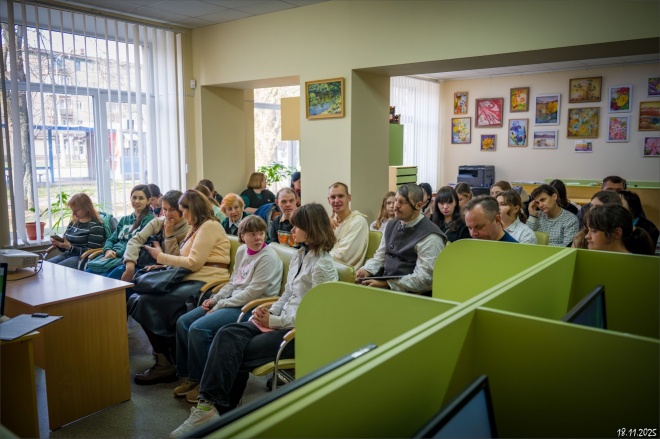
Photo: adapted screenings in Poltava region
Films that speak a language you can understand
The programme included films with different moods: emotional, challenging, sometimes painful. Yet each film found its viewer.
The adapted screenings were designed so that the films could “resonate,” echoing memories, feelings, or lived experiences.
-
My Sweet Child deeply moved blind and hard-of-hearing viewers. They recognised themes of trust between parents and children, the search for support in difficult circumstances, and that quiet yet persistent power of love that finds a way even through darkness or silence.
-
Last Song from Kabul resonated especially strongly with people with hearing impairments. They were struck by the strength of spirit of young girls fighting for their voice, both literally and metaphorically.
-
How I Spent My Summer Holidays? felt close to young audiences thanks to its sincerity, childlike “adultness”, and its reminder that even war cannot steal youth. And it was this film that became the centre of one of the festival’s most unique events.
A special integrative meeting
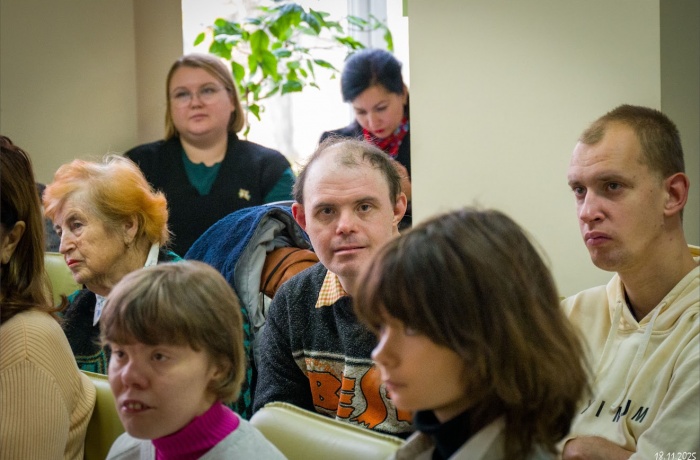
A special screening of How I Spent My Summer Holidays? brought together students from Poltava’s universities and children and teenagers with mental disabilities. It was not just an audience, but a genuine community that experienced the film together.
The students shared that this screening helped them let go of stereotypes and see people with intellectual disabilities without barriers — as equals, sincere, and present.
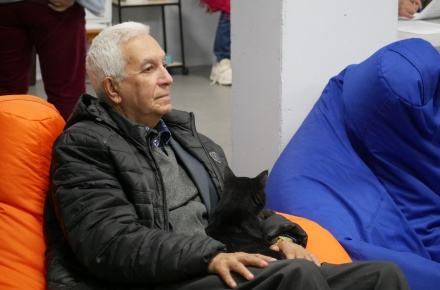
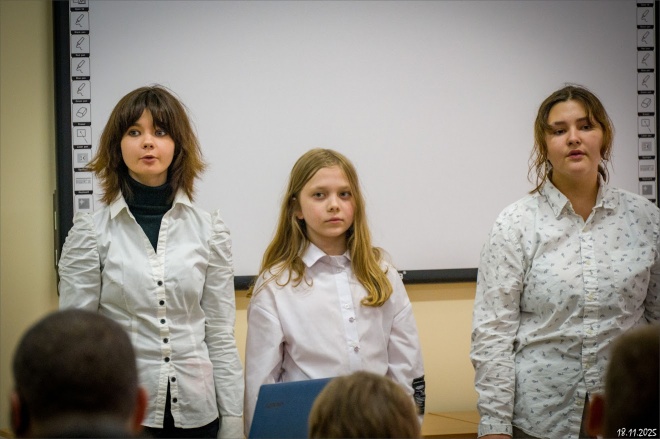 Photo: about inclusion with children
For the children and teenagers, the meeting was no less important: people welcomed them, spoke to them, listened to them.
Lesson from the Travelling Festival: Inclusion is cooperation
The festival in the Poltava Region showed that inclusion is not about ticking a box in the programme.
It is about dialogue and the willingness to listen to those whom society has long overlooked. It is about adapting formats to people’s real needs.
The main conclusion voiced at many meetings was this: there should be more adapted films, but they must be created and prepared for screening together with those who best know what accessibility should be like.
Only then does inclusion stop being a concept and becomes action.
The 22nd Travelling Docudays UA is held with the financial support of the European Union, the Embassy of Sweden in Ukraine, and International Media Support. The opinions, conclusions or recommendations do not necessarily correspond to the views of the European Union, the governments or charities of these countries. Responsibility for the content of the publication lies solely on its authors.