Sanatorium: Different perspectives on one film during a Kherson dialogue
Sanatorium: Different perspectives on one film during a Kherson dialogue
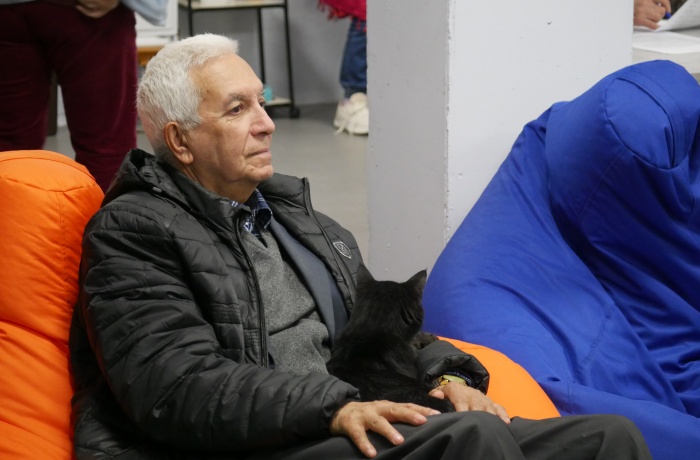
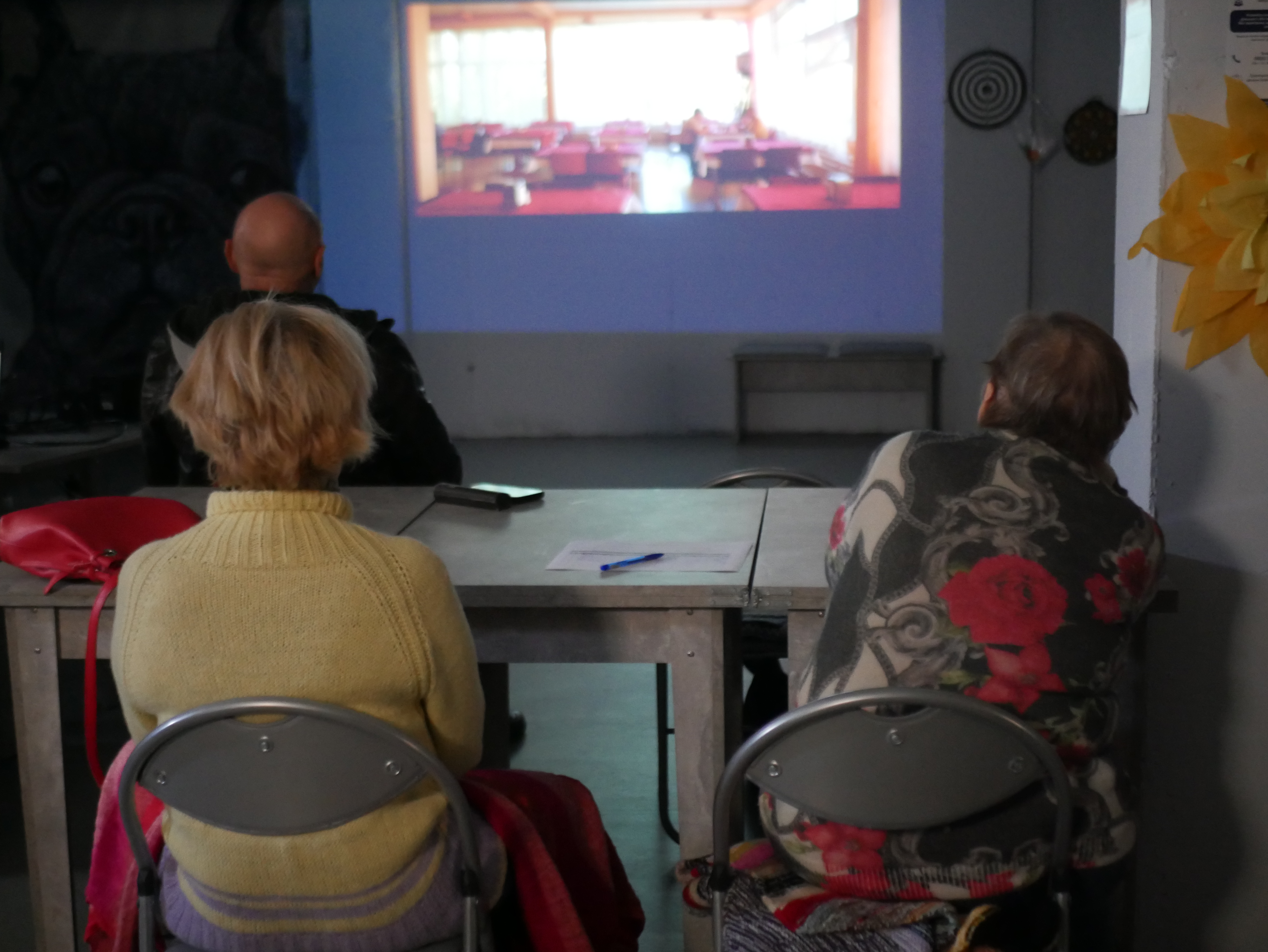
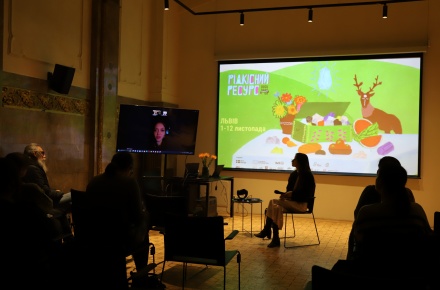
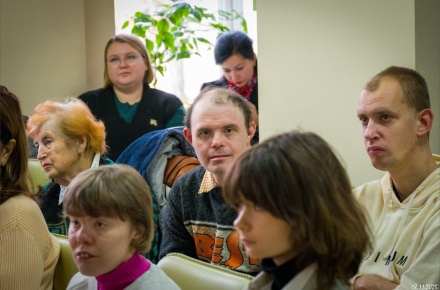
Photo: watching the film Sanatorium, photo credit Oleksandr Andriushchenko, Vgoru Media Platform
Sanatorium was the opening film of this year’s Docudays UA, and the Irish Film and Television Academy recommended it for the Oscars in the category of Best International Documentary Feature Film.
Cinema as immersion in life
The film’s high professional quality was noted by Ustyn Danchuk, a Kherson-based director, founder, and lecturer at the First Kherson Film School:
“The cinematography is fantastic. Every shot is like a postcard, like a painting. And when an air raid alert begins, the cameraman runs to the basement, to the shelter, filming handheld — as if stepping out of the ‘mode’ where everything is perfect and beautiful. And then he returns to the aesthetics again. There is this concept, a slice of life. And this is a very vivid slice of life of this sanatorium. You simply immerse yourself in its atmosphere.”
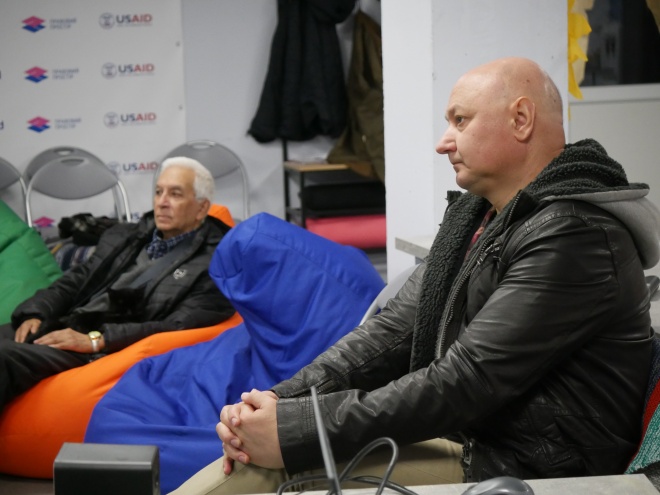 Photo: Oleksandr Andriushchenko, Vgoru Media Platform
Nostalgia, memory, and recognition
During the discussion, viewers shared their own memories: many recognised familiar experiences of treatment in similar sanatoriums reflected in the film.
Serhii Movchan, a representative of the National Council on Television and Radio Broadcasting in the Kherson Region, shared:
“I’m impressed. I really liked the film, it’s somewhat nostalgic. You recall moments from childhood, from similar medical facilities of the Soviet period — the same machines, tubes, the overall conditions…”
Valeriia Martynova, a resident of Kherson, also recalled her own experience of treatment at Kuyalnyk, but drew attention to a different dimension of the film:
“Now we are at war, we often hear gunfire. In the film, you can see smoke from explosions in the distance twice. Two years have passed, and Odesa, Mykolayiv, and Kherson are still being bombed. But life goes on. People think about children, about treatment. The film inspires you to live. Ukraine is moving towards life. We will win.”
What is this film really about?
However, not all viewers perceived Sanatorium in the same way. Aishe Mamina expressed the view that the film is primarily about war:
“About war through the lives of ordinary people, through the problems of families, through how it is present even in places where people are supposedly meant to be healed.”
In contrast, Viktor Zaviriukha saw a different emphasis in the film:
“For me, it is a film about life despite the war. People want to recover, to move forward — and that is inspiring.”
He emphasised the importance of developing the resort and health-care sector and rehabilitation services, as the need for them will only continue to grow.
Rymma Tsyhulska supported this view, stressing:
“It is very important to think about the recovery of people with special needs and those who have lived through the war, especially our defenders. They need not just attention, but full-fledged rehabilitation.”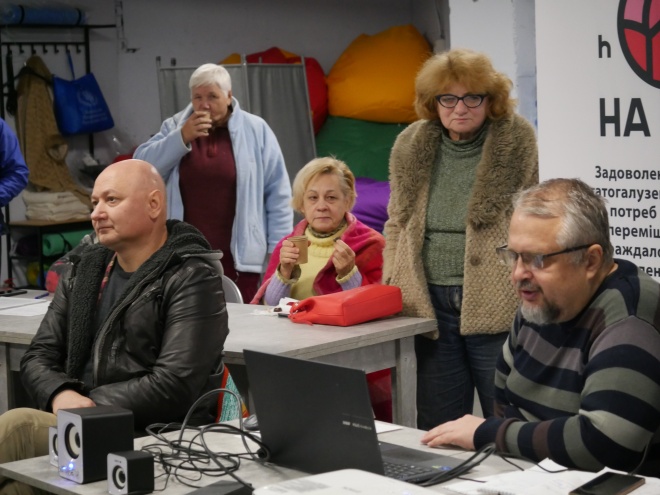
Photo: Oleksandr Andriushchenko, Vgoru Media Platform
The atmosphere and systemic problems
Another important dimension of the film was discussed by Volodymyr Idayatov:
“It feels as if you have actually been to this sanatorium yourself, undergone the treatments, felt the mood. The music, the songs — they create a very strong emotional background. But the film also raises a serious issue: such institutions are sustained by the people who work there. This is a rare resource. Yet the sector cannot rely on altruism alone — it needs investment.”
A similar position was voiced by Halyna Bakhmatova, a human rights advocate and professor at Kherson State University:
“I felt no nostalgia whatsoever for Soviet services. Our people deserve rehabilitation in dignified conditions — with intact walls, functional facilities, and safe shelters.”
Leilia Dzhaksim, Chair of the Board of the Kuresh Crimean Tatar Cultural Centre, added that the film is important not only for the characters on screen, but for every viewer.
Films that launch real change
As reported by the event moderator Dementii Bilyi, Head of the Kherson Regional Organisation of the Committee of Ukrainian Voters, the film has already had tangible consequences:
“After the screening of Sanatorium, the leadership of the Odesa Regional State Administration allocated funds for repairing the roof and purchasing equipment for the conference hall, which had been closed for six years.”
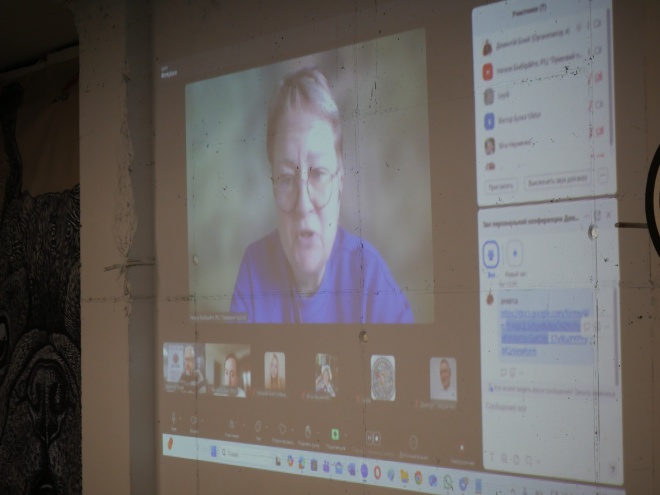 Photo: Oleksandr Andriushchenko, Vgoru Media Platform
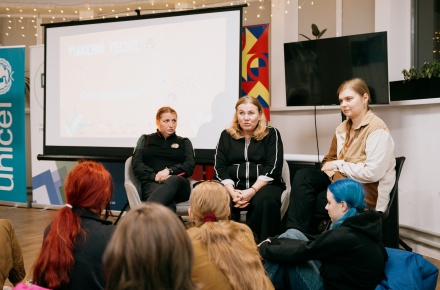
The discussion of Sanatorium in Kherson became yet another example of how, at the Travelling Docudays UA, documentary cinema turns into a space for public conversation — about war, recovery, dignity, and responsibility.
And perhaps it is precisely from these conversations that real change begins.
Author: Iryna Ukhvarina
The 22nd Travelling Docudays UA is held with the financial support of the European Union, the Embassy of Sweden in Ukraine, and International Media Support. The opinions, conclusions or recommendations do not necessarily correspond to the views of the European Union, the governments or charities of these countries. Responsibility for the content of the publication lies solely on its authors.