Docudays UA in Zaporizhzhia as an Opportunity for Society to Talk about What Matters
Docudays UA in Zaporizhzhia as an Opportunity for Society to Talk about What Matters

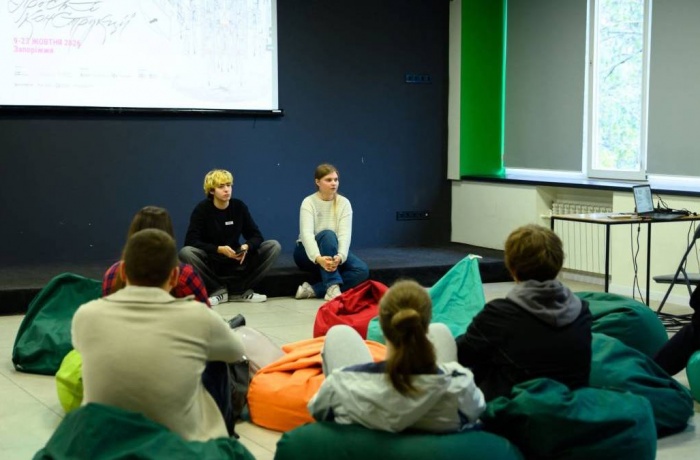
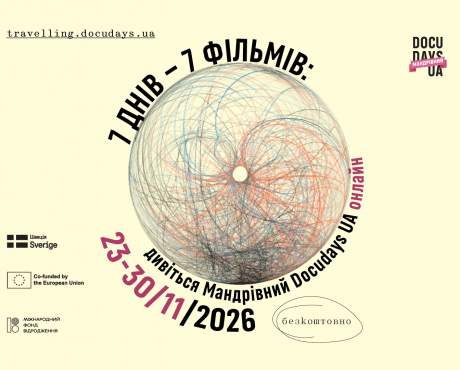
This year’s Travelling Docudays UA International Documentary Film Festival spans more than one hundred venues in towns and communities across Ukraine, from Zaporizhzhia, the Kharkiv Region and Kherson to Lviv, Uzhhorod and Lutsk.
Zaporizhzhia was the first to launch the Festival. Audiences had the opportunity to see 12 documentaries: six feature-length films and six shorts. Ten of them were made by Ukrainian filmmakers.
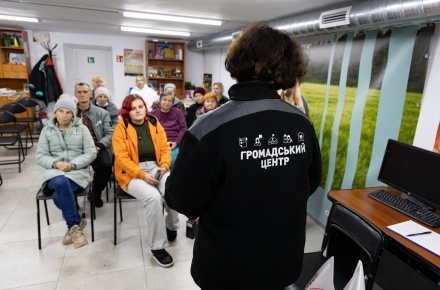
The programme featured more than 30 in-person events. These included film screenings, human rights discussions, a Living Library, meetings with experts and the people featured in the films, as well as events at educational institutions and regional libraries. Participants had a chance to speak with filmmakers, guest experts and cultural figures, to analyse problems together and seek the best ways of addressing them at the local and national levels.
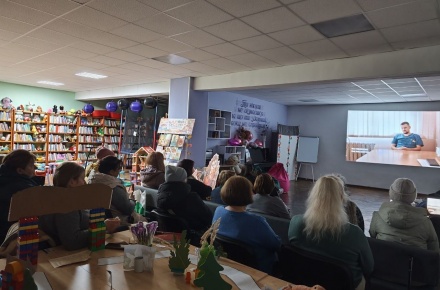
Screenings and discussions were held, among other venues, in the shelter of the Zaporizhzhia Regional Universal Science Library and at the Dovzhenko Cinema.
How Do We Hear, Understand, and Support People?
The first film in Zaporizhzhia’s Festival programme was Traces by Alisa Kovalenko and Marysia Nikitiuk. After the screening, director Alisa Kovalenko joined the discussion about supporting survivors of conflict-related sexual violence via a video call. The director talked to the Zaporizhzhia audience from Nuremberg. Together with the film’s protagonist, Iryna Dovhan, she is presenting the film abroad as part of a working tour of Europe.
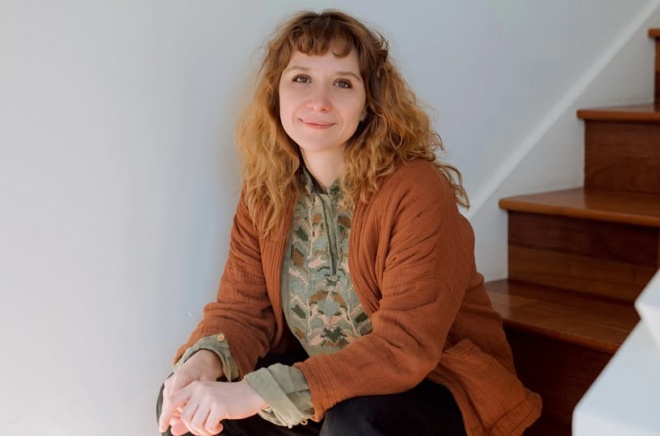
Director Alisa Kovalenko was born in Zaporizhzhia
The meeting provided an opportunity to hear directly from Alisa, ask questions and talk about the stories the film reveals to the world. The discussion gave rise to two human rights discussions led by Larysa Holovko, Head of the Doloni NGO. The first one, To Hear, Understand, and Support, explored how to support someone who has survived violence and why documenting crimes is essential. The second was a meeting within the Living Library project entitled Women Who Take Action: Stories of Resilience and Activism, to which three displaced women and civic activists were invited to share their own life stories.
Fragile Art and Cultivating Inner Strength
The film The Blessed Ones explored the role of art at a time when the world is burning with war. The film was screened both in the shelter of the Zaporizhzhia Regional Universal Science Library and at the Dovzhenko Cinema.
Its creator, Andrii Lysetskyi, is a Ukrainian director and art cinematographer. The film shows the first months of the full-scale war, the first destruction and losses. Artists facing the challenges of the full-scale war try to create beauty from fragments of metal and crystal glassware.
Our city feels the breath of war every day, so the audience felt a connection between what they saw on screen and their own lives.
“In the morning, it sometimes feels as though you do not know where to find the strength after the overnight bombing. But the strength comes, and you work. Art is the same—it is eternal. No matter how hard the enemy tries to destroy us, every day we create something new for the national and international stage. Even if they are installations made from broken crystal,” said Valerii Stoychev, author of several books written during the war.

The experts that day were Valerii Stoychev and Inesa Atamanchuk. Serhii Zvilinskyi was busy that day, so Volodymyr Hordiichenko shared his experience of artistic work during the war.
During the discussion at the Zaporizhzhia Regional Universal Science Library, moderated by Larysa Holovko, the experts recalled lost dreams and opportunities: to restore a stained-glass window in Nova Kakhovka and create a new one in the exhibition space in Vasylivka. Art is a powerful yet fragile substance. The survival of Kateryna Honcharenko’s works illustrating the history of the Vasylivka palace complex is therefore a miracle. However, the fate of the artist’s legacy in the occupied territory is currently unknown. So the fact that Katia finally feels the need to teach children offers hope.
Despite everything we are experiencing now, the most important thing Valerii Stoychev saw between the lines of the conversations on screen was that the Ukrainian nation is growing stronger in this war.
We mentioned the historian Leonid Marushchak, who, together with the team of the Museum Open for Renovation NGO, evacuated hundreds of thousands of historical artefacts and works of Ukrainian art. Serhii Zvilinskyi carried out equally important work together with his colleagues from the Huliaipole Antiquities NGO.
On the Openness of the World and the Desire to Return

There is a reason for this interest. The film was shot in Zaporizhzhia, and its protagonist, Yaroslav Adamov, comes from our city. He moved to Poland but found a way to remain connected to his home city with the help of a robot equipped with a camera.

Yaroslav has already returned home to Ukraine, and his story continues beyond the screen.

During the Travelling Festival, Yaroslav actively participated in screenings and discussions of Homecoming. The film was shown at Zaporizhzhia Polytechnic National University and at the Zaporizhzhia juvenile probation sector. An additional screening was also held at the Zaporizhzhia City Youth Centre, where Yaroslav was invited to a meeting as part of the opening of the exhibition What It Means to Be Young.
After the screening, participants shared their own stories of relocation. They also discussed the internet: for everyone, it is part of everyday life, a means of communicating, maintaining relationships and staying connected with loved ones even when they are far away.
Theatre as a Forum for Finding Mutual Understanding
A relevant highlight for the predominantly adult audience was the forum theatre performance The Flat by the I Hear You theatre, about the right to a home, safety and support, held at the Zaporizhzhia City Library. The event was moderated by Larysa Holovko, a forum theatre joker and human rights trainer.

The performance is based on the story of Nina, an internally displaced woman who is forced to rent accommodation in a city that is new to her together with her two daughters. The performance raises questions about adapting to a new environment, limited space and constant uncertainty. How can a balance be found between the rights of the landlord and a person’s right to dignified and safe living conditions?
Against the backdrop of misunderstandings with the landlady, problems arise with the children, who are growing up and do not always have an easy relationship with their mother.
After the performance, during the interactive part of the forum theatre event, audience members came onto the stage, replaced the protagonist and tried out different behavioural strategies as they saw fit. Women participated particularly actively, some of whom had personal experience of forced displacement. They proposed possible courses of action, acted out difficult situations and, together with the actresses and other participants, analysed the possible consequences of each decision.
This made it possible to see the story from different perspectives. Participants discussed the state’s responsibility for creating conditions that allow displaced people to live with dignity, access to housing, the need for jobs and high-quality social support. After all, people who have lost their homes, property and familiar surroundings are often in a state of profound shock and unable to cope with the many problems they face.
Support from local residents was an important topic. A sense of safety and belonging is created not only through housing, but also through human relationships
and a willingness to listen, help and not leave someone to face difficulties alone.

“This is an important and difficult topic today. We thank the actors and audience members for responding to it and caring!” wrote Iryna Peshnohraieva, Head of the library that hosted the event.
In Search of a Normal Life
Mykola Nosok’s documentary A Normal Life tells the story of a mother of several children who fled the Russian-occupied Kherson region with them. Once safe, she tries to keep her large family together and build a new life from the ruins of the old one. The film explores how war destroys a familiar way of life and how a person tries to regain their bearings and find “normality” amid complete uncertainty and the trauma of forced displacement.

The film was seen, among others, by high schoolers at Zaporizhzhia Grammar School No. 8. After the online screening, the students reflected together with expert Nataliia Bohomolova on the power of maternal love, the difficulties of rebuilding life after forced relocation, and the search for safety and stability for children after what they had experienced under Russian occupation.
Talking to Young People about Human Rights
“Is the majority always right?”
“Why do human rights concern each of us?”
“What lies behind the words human dignity?”

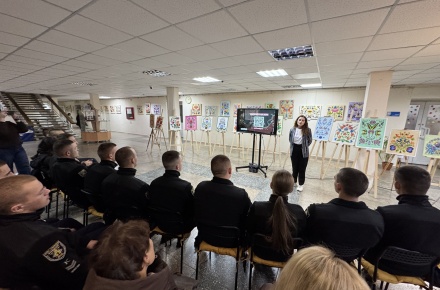
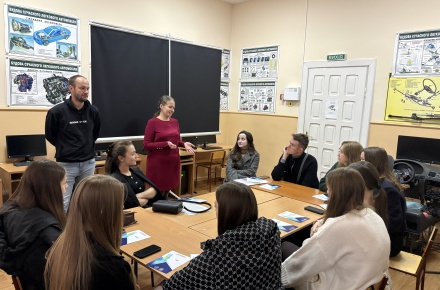
First-year students of the Zaporizhzhia Metallurgical Vocational College of Zaporizhzhia National University gathered to seek answers to these questions by taking part in the Introduction to Human Rights training session as part of the Travelling Docudays UA.
During the training, the students explored five characteristics of human rights: duality, verticality, their contractual nature, limitations and fragility. They discussed the relationship between the individual and the state, the limits of permissible restrictions on rights, and why rights that seem self-evident to us need protection.
An important part of the meeting was a discussion about human dignity, the value possessed by every person. This idea forms the basis of Article 1 of the Universal Declaration of Human Rights: all human beings are born free and equal in dignity and rights.
The Festival programme in Zaporizhzhia continued until 23 October. Admission to all screenings and events was free and provided opportunities to join discussions of urgent and pressing issues of our time.
Prepared by Inesa ATAMANCHUK; photos by the Zaporizhzhia Regional Universal Science Library, Iryna PESHNOHRAIEVA, Mykola BARYSHEV and the Travelling Docudays UA page.