From Decolonisation to Motherhood on the Frontline: A Diverse Programme of Events in Chernihiv Region
From Decolonisation to Motherhood on the Frontline: A Diverse Programme of Events in Chernihiv Region

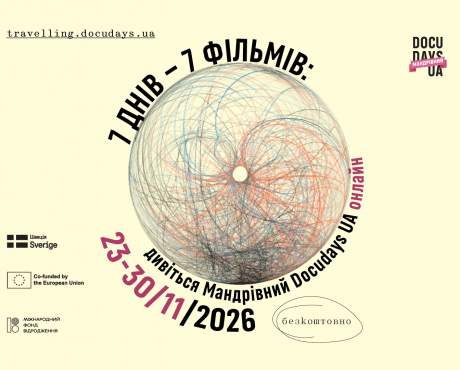
The Travelling Docudays UA is making its way across the Chernihiv Region, with screenings already held in Mena, Horodnia, Koriukivka, Sosnytsia, Ripky, and Svitanok. Once again, the festival has brought border communities together around documentary cinema and important conversations.
At Mena Gymnasium, audiences watched The Promise, directed by Daan Veldhuizen. The film tells the story of West Papua, a former Dutch colony whose people's aspirations for independence became hostage to international interests and geopolitical agreements.
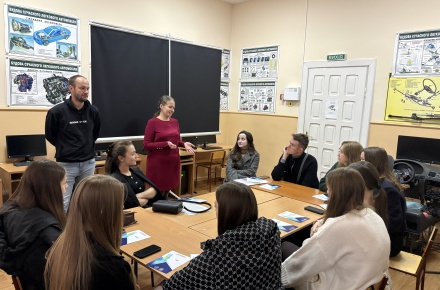
Following the screening, a lecture on participatory democracy, decolonisation, the right of peoples to self-determination, and neocolonialism was delivered by Pavlo Suprun, a civic activist and historian.
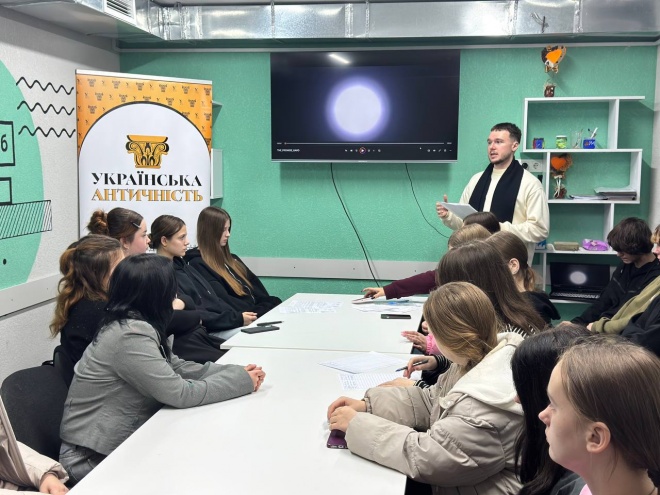
Photo: Pavlo Suprun, civic activist, and audience members at the screening of The Promise.
“As a trained historian, I really enjoyed the documentary The Promise. I love the documentary genre, and I was interested in learning about the history of the Papuan people in this format, as I knew nothing about what was happening to them before I explored this subject,” Pavlo Suprun shares.
Motherhood on the Frontline
The Docudays UA film club at the Horodnia Centralised Library System brought local residents together for a screening of Witnesses. Place of Birth, directed by Maryna Kronhlevska.
The story of the Chernihiv maternity hospital operating during the city's 37-day siege left a deep impression on the audience: despite constant shelling and shortages of essentials, babies continued to be born there.
“The film left me with mixed feelings. I was deeply moved by our people, who gave everything they had to save others, but at the same time, it is heartbreaking that this is still happening to us,” says audience member Maryna. “But we keep going, we believe in our doctors and in the men and women protecting us, and we wait for Victory.”
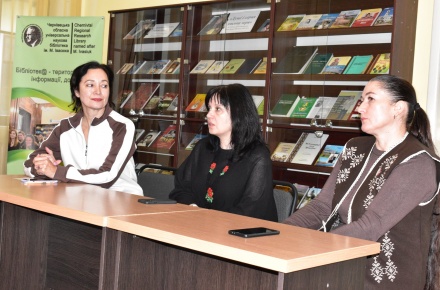
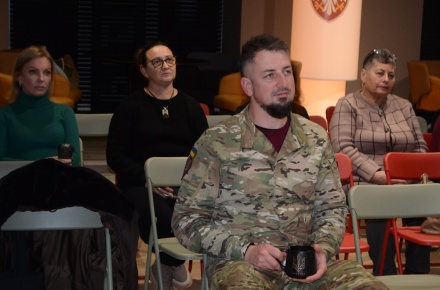
Following the screening, a discussion entitled Motherhood on the Frontline: From the Medical Challenges of War to the Systemic Rehabilitation of Women was held. It was facilitated by Svitlana Sira, a practising obstetrician-gynaecologist and family planning trainer who previously worked at the maternity hospital featured in the film.
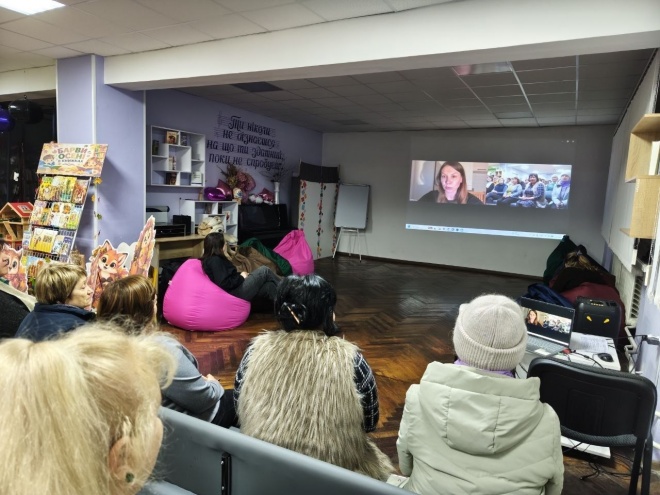
Photo: Svitlana Sira, practising obstetrician-gynaecologist; discussion participants.
“My heartfelt thanks to the doctors for their tireless work. It is wonderful when people come together and stand their ground as one. There is such joy in seeing children come into the world. Our Ukraine was, is, and will always be. God willing, these children will see not this period of war, but peaceful times,” says Halyna, a discussion participant.
In the Koriukivka community, two films were selected for different audiences.
Young people under 18 watched A Normal Life, directed by Mykola Nosok. The story of a mother of many children who, after fleeing Russian occupation, tries to rebuild her family and start a new life resonated with the young audience and sparked a lively discussion about the rights of people who remain in Ukraine’s temporarily occupied territories.
For audiences aged 18 and over, the festival screened Peace for Nina, directed by Zhanna Dovhysh. The film tells the story of Nina Branovytska, the mother of Ihor Branovytskyi, a defender of Donetsk Airport who was tortured and executed by Russian mercenaries while in captivity. The film struck a chord with the audience, as many of us have relatives defending Ukraine today.
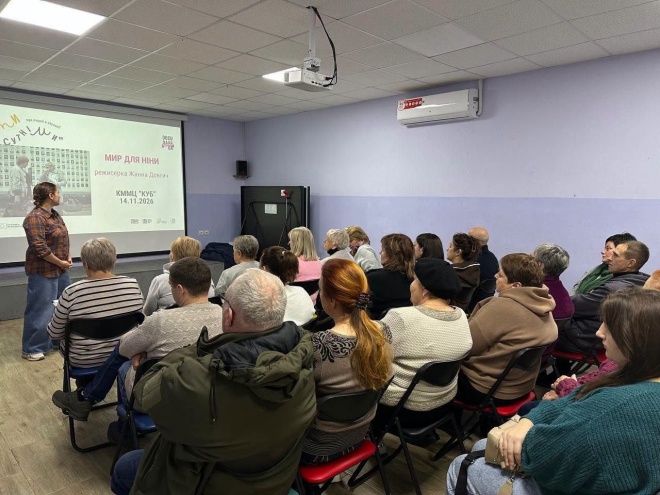
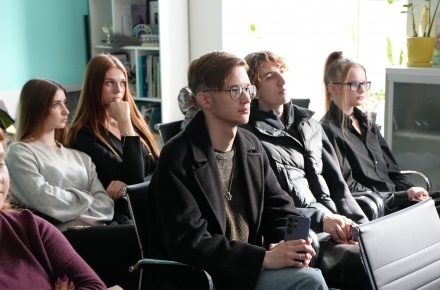
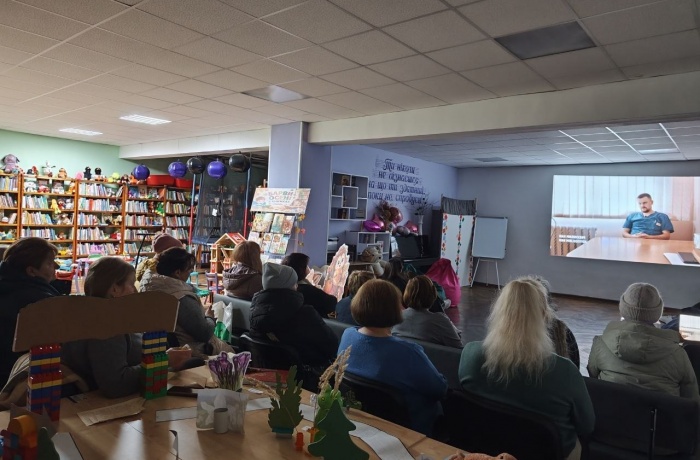
Photo: Screening of Peace for Nina.
After the screening, a lecture entitled Memory, Truth, and Justice: How to Live with Loss and Keep It from Being Forgotten was held. Participants discussed the loss of a child, the search for truth, accountability for war crimes, and the role of documentary cinema in preserving memory.
Kateryna Onyshchuk, a research fellow at the Koriukivka Historical Museum, shares her impressions:
“I had the opportunity to moderate screenings of two documentaries, and I am very glad that Koriukivka audiences got to see them. These films are about things that hurt each and every one of us today. Both are incredibly powerful. They do not try to embellish reality, nor do they allow you to simply watch and forget. They make you think, empathise, and talk. And I think that is precisely where the power of documentary cinema lies.
I am proud that Ukraine has filmmakers capable of creating documentaries of such calibre. And at the same time, I cry because we have to make and watch films like these. Because behind every story are real people.”
Coming to Terms with the Past and Fighting for the Future
In Sosnytsia, a screening of Traces, directed by Alisa Kovalenko and Marysia Nikitiuk, took place at the O. P. Dovzhenko Lyceum. Following the screening, participants joined a discussion as part of the Being Present campaign, focusing on people living in Ukraine’s temporarily occupied territories, their rights, and the importance of public attention to their experiences.
The discussion was facilitated by Yuliya Kovtun, a civic activist, trainer, and co-author of social projects.
The film The Illusion of a Quiet Night, directed by Olha Chernykh, brought the residents of Ripky together. The screening gave them an opportunity to reflect on what our country is like and how it continues to live through the full-scale war.
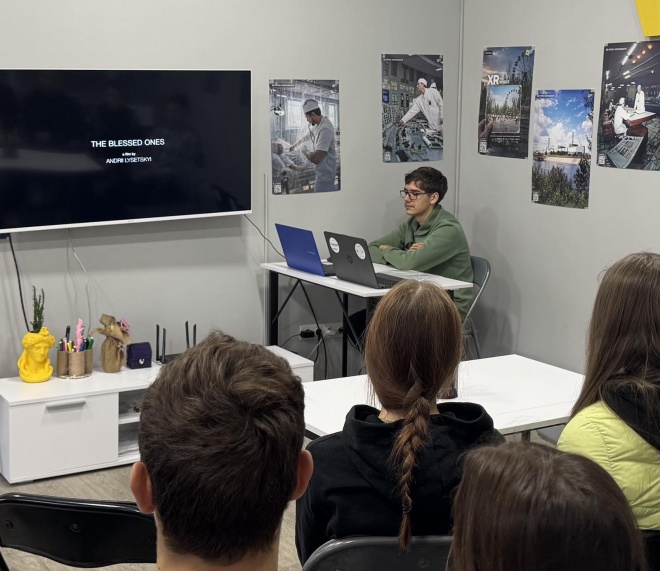
Photo: Screening of The Blessed Ones.
The festival also visited Svitanok with The Blessed Ones, directed by Andriy Lysetskiy. The film brought young people together for a conversation about personal transformation and how we perceive those around us. Attendees shared how glad they were to have the opportunity to take part in the festival for the second year in a row.
All because documentary cinema offers a chance to hear stories that may feel close to us or be entirely unfamiliar, ask difficult questions, and share our own thoughts.
The 23rd Travelling Docudays UA is supported by the European Union, the Embassy of Sweden in Ukraine, and the International Renaissance Foundation. The views, conclusions, or recommendations expressed herein do not necessarily reflect those of the European Union, the governments, or the charitable organisations of these countries. The authors of this publication are solely responsible for its content.