Cinema and Dialogue: Daria Penkova Presented Where’s My Body Armor? in the Poltava Region
Cinema and Dialogue: Daria Penkova Presented Where’s My Body Armor? in the Poltava Region
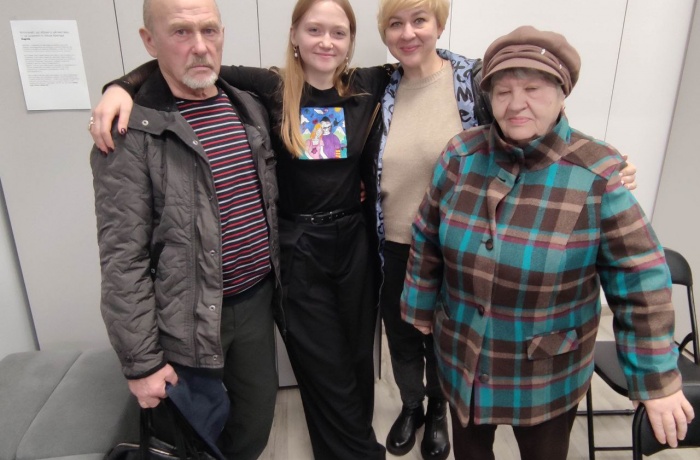
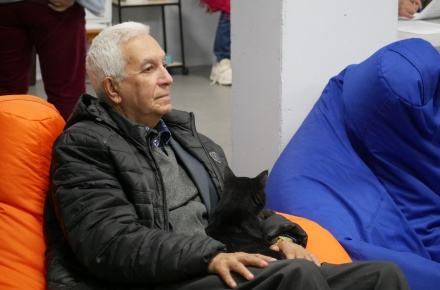
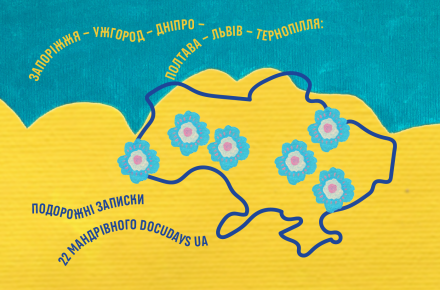
The Travelling Docudays UA in the Poltava Region each year organises not only screenings of contemporary human rights documentary films in the region, but also live conversations — honest, challenging, and often painful. Such was the meeting that followed the screening of Where’s My Body Armor?, when director Daria Penkova came to Poltava together with her family: her grandmother, grandfather, and aunt. Their presence created a special atmosphere of closeness and trust. And within this shared presence, the film itself resonated even more deeply and on multiple levels.
How the film’s story was born
Daria Penkova is a director and cinematographer from Druzhkivka in the Donetsk Region. Even before the full-scale invasion, she was making short documentary stories, primarily working as a cinematographer. One of her first such works was a film about her own family, about everyday life in the small, cosy town of Druzhkivka, about simple joys and everyday concerns.
In 2022, when the war entered a new phase, Daria decided to return to this idea. It was important for her to continue documenting the lives of her loved ones — now in a frontline city. But reality, as often happens in documentary cinema, intervened and altered the original script.
At the railway station, Daria unexpectedly met Andrii, an old friend with whom she had previously worked on another film. Before the war, he was a cyclist, and it was as an athlete that he first became the subject of her camera. After several years of war, however, Andrii was returning to his position as a military man, following an injury. He was different: more restrained, more mature, yet at the same time very vulnerable. It was this encounter that marked the beginning of a story the director would later describe as one that “began to write itself.”
The initial idea — a film about her family — remained important, but Andrii’s story, his relationships with fellow soldiers, his attempts to maintain inner balance between the front and home, his doubts and disorientation after being wounded, gradually became the core of the future film.
Invisible war
During the screening, silence filled the hall. The audience watched the screen intently, listening closely to the pauses and to the silence between words. There are no battle scenes or heroisation of war in the film. Instead, it seeks to show what usually remains outside the media image of war — another kind of life, intimate and fragile.
This is a story about the interaction between civilians and the military in their everyday dimension: where care borders on anger, love on anxiety, and ordinary conversations about daily life turn into calls from the front. Viewers were especially struck by the scene with the missing body armor — the very moment from which the film takes its title. In this scene, as in the entire film, reality proves so eloquent that it needs no directorial reinforcement.
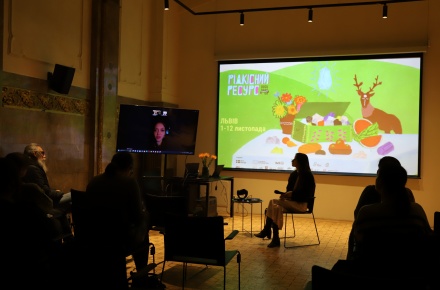
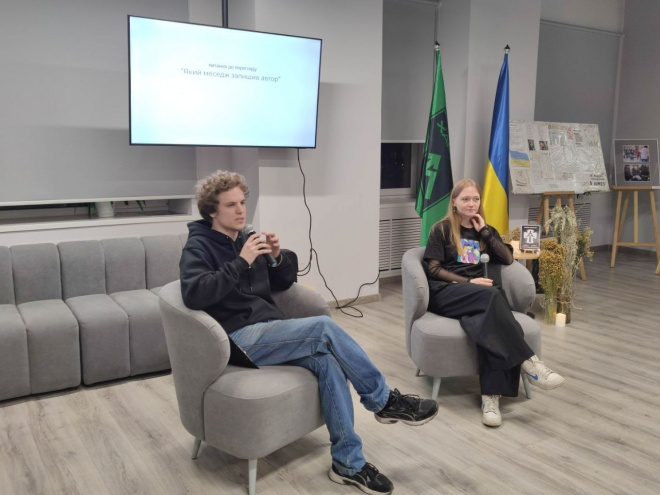 Photo: conversation with director Daria Penkovaya after the screening
“I didn’t embed special meanings into every scene,” Daria admitted during the discussion. “Everyone saw something of their own in this film. And for me, that is the most valuable thing.”
The conversation following the film: honest and genuine
After the screening, a long and warm conversation followed. Viewers asked both personal questions and questions about working with military personnel, and about what remained outside the frame. Many were curious how the director found the courage to show such intimate moments and to allow the audience to come so close to the inner world of the people she was filming — especially her own family members.
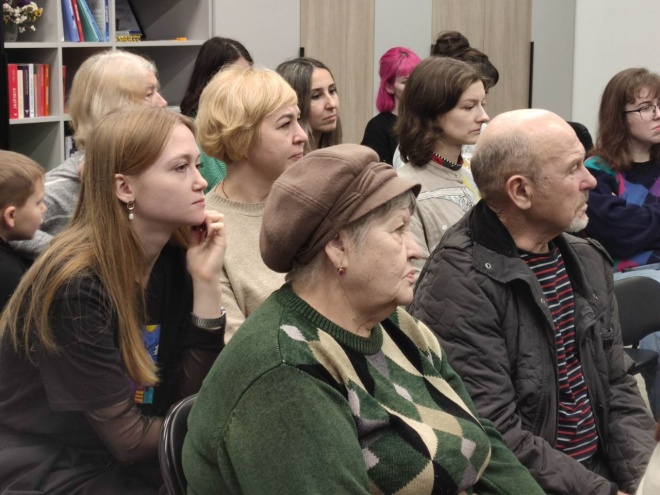 Photo: Daria Penkov at the screening of her film Where’s My Body Armor?
The presence of Daria’s family made the meeting even more informal. Viewers were able not only to see the protagonists beyond the screen, but also to feel that this story does not end with the final credits: it continues here and now, in real life.
And it is precisely in such meetings — live, honest, and dialogic — that documentary cinema acquires its true meaning. This time, the Travelling Docudays UA in the Poltava Region once again reminded us: reality is often stronger than any script, if it is allowed to be heard.
The 22nd Travelling Docudays UA is held with the financial support of the European Union, the Embassy of Sweden in Ukraine, and International Media Support. The opinions, conclusions or recommendations do not necessarily correspond to the views of the European Union, the governments or charities of these countries. Responsibility for the content of the publication lies solely on its authors.