Through Film to Dialogue: Home, Inner Strength and Cultural Heritage
Through Film to Dialogue: Home, Inner Strength and Cultural Heritage

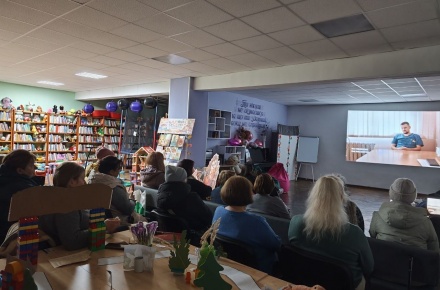
The 23rd Travelling Docudays UA visited seven localities in Chernihiv Region: Chernihiv, Ripky, Mena, Horodnia, Sosnytsia, Koriukivka and Svitanok. In the regional centre, audiences watched three documentary films, each with its own story and themes for discussion.
Hometown Through the Lens: Screening of Witnesses. Place of Birth
The film by Maryna Kronhlevska tells the story of the 37-day siege of Chernihiv at the beginning of Russia's full-scale invasion, as experienced by the staff of the city's maternity hospital. When the city was cut off from the rest of the country and the only evacuation and supply route came under targeted shelling, medical professionals continued to deliver babies. Under fire, in a bomb shelter, with no reliable access to water, food or medication, they helped new life come into the world even in the most difficult circumstances.
“This film is about people. About birth and rebirth. I cried, but I couldn't even tell why. It hurt so much... But I also felt such joy for our people, for the doctors, their strength and dedication to their profession. The feeling of euphoria stayed with me for several hours, and the words of the director and the film's protagonists are still ringing in my ears,” shared Sofiya Demydеnko, a resident of Chernihiv.
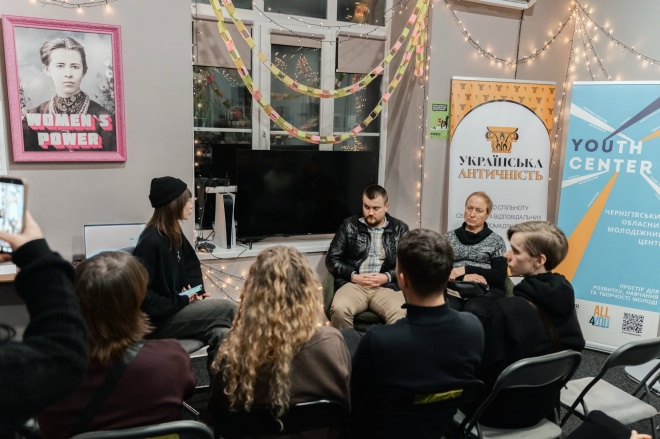
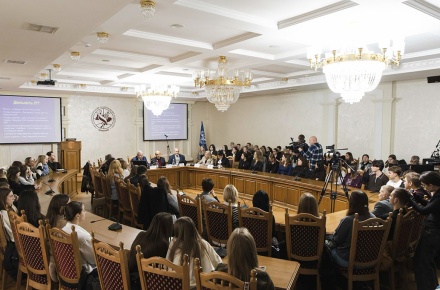
Photo: Ivan Mikliusevych, obstetrician-gynaecologist; Vira Tselуk, head midwife; participants in the discussion.
The screening was followed by a discussion with director Maryna Kronhlevska and two of the film's protagonists: obstetrician-gynaecologist Ivan Mikliusevych and head midwife Vira Tselуk. They talked about human dignity, professional responsibility, memory and the experience Chernihiv Region had lived through.
“I left the screening with an extraordinary sense of inner strength, warmth and faith in us,” said audience member Yevheniy Portnyy. “It's a story that truly touches the deepest chords of the soul and leaves a lasting, radiant impression. I'm proud to call myself Ukrainian.”
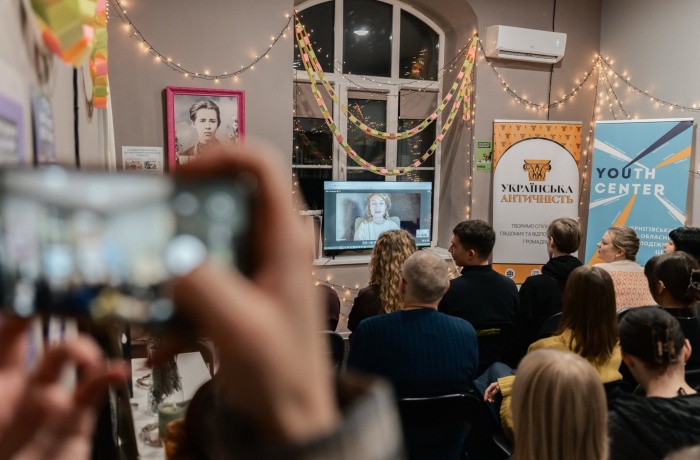
Homecoming: Staying Connected to Home, No Matter What
The film by directors Roman Khimei and Yarema Malashchuk explores forced emigration, the connection to one's home and memories of life before the full-scale invasion.
“The film is interesting and unusual. I was particularly drawn to its subject matter, its relevance and the interesting, unconventional ways it explores our inner bearings and emotions. It really resonated with me,” shared Olena, one of the screening participants.
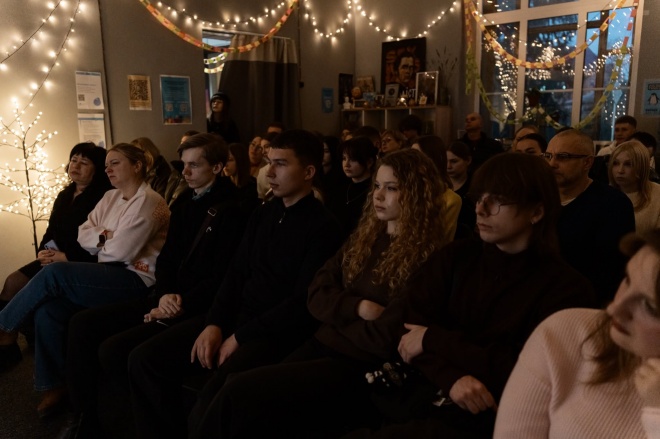
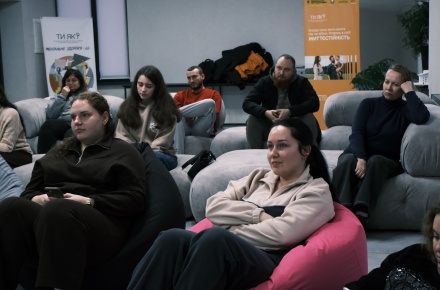
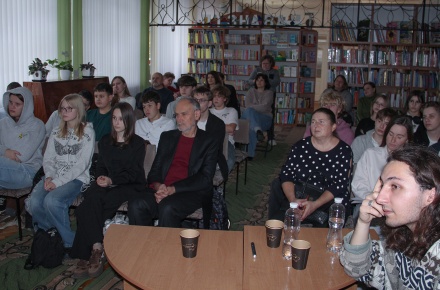
Photo: the screening.
After the screening, participants shared their reflections on the protagonist's experience: losing a sense of home and searching for ways to return to it in a new reality. They also discussed human rights, robotics and artificial intelligence.
“It's a very sad film, but it raises many important issues,” said audience member Dmytro. “It also makes you think about the rapid development of technology: in the future, robots may replace not only people in many fields, but even pets. We live in the age of artificial intelligence, and we still don't know just how profoundly it will affect our lives and the future of humanity.”
The Right to Have a Voice: Celtic Utopia
The festival programme in Chernihiv concluded with a screening of the documentary Celtic Utopia, directed by Dennis Harvey and Lars Lovén. The film tells the story of contemporary Ireland and a new wave of musicians reimagining traditional Irish folk music.
Through music, personal stories and reflections on the colonial past, the protagonists explored national identity, cultural heritage and what a country searching for its own voice might look like.
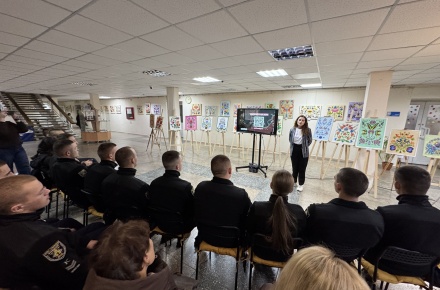
During the discussion, participants drew parallels between the Irish and Ukrainian experiences, particularly in the context of decolonisation, language and cultural heritage.
Polina, a resident of Chernihiv, shares her impressions:
“The film left a strong impression on me. What resonated with me most was how the theme of national identity unfolds through music and the protagonists' personal stories. The film evoked sadness and outrage, but at the same time, admiration for people fighting to preserve their culture. During the discussion, it was fascinating to hear different perspectives and reflect together on how important it is to have our own voice and the right to determine our own future.”
Thus, the screenings in Chernihiv brought together documentary stories and created a space for dialogue about the experience of war and forced displacement, human resilience, memory, human rights and cultural identity.
Photo credits: Andriy Syryk, Polina Stepanenko.