Returning to Civilian Life: What Defenders Need to Know
Returning to Civilian Life: What Defenders Need to Know

How can we create decent conditions for service members returning to civilian life? What barriers do veterans face, and what needs to change to overcome them?
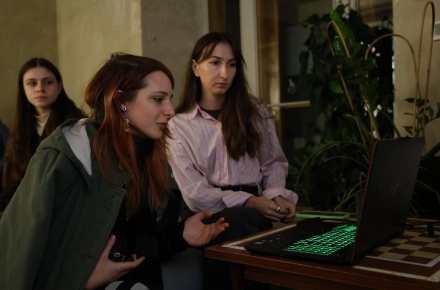
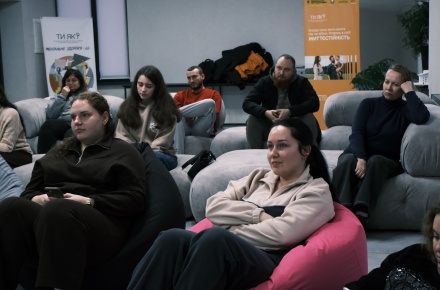
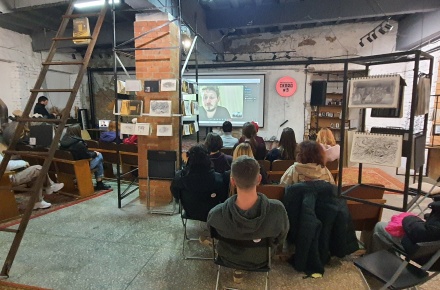
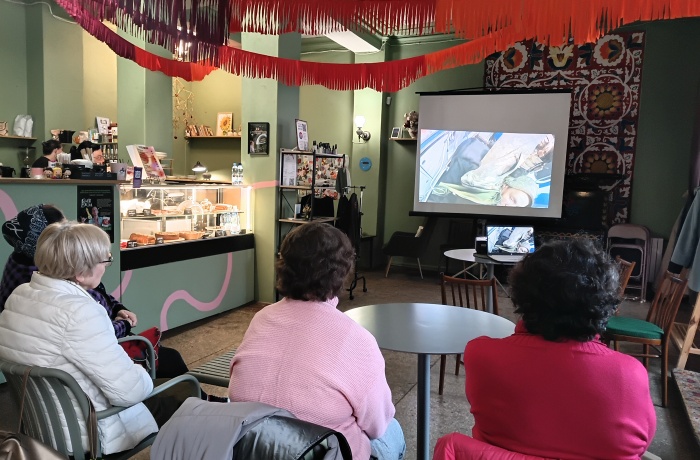
The human rights programme in Kryvyi Rih continued with a coffee meeting with human rights defenders entitled “Returning to Civilian Life: Legal Aspects”.
The discussion brought together Kateryna Pryimak — a veteran, combat medic, head of the VETERANKA movement and co-founder of the Women Veterans Movement; Vitaliy Koshevko — a veteran and veteran support specialist; and Yaroslav Shcherbak — a lawyer specialising in military law.
(Un)availability of Public Services
One of the central topics of the discussion was access to public services for veterans. The existence of benefits, payments and support programmes does not necessarily mean that people can access them without difficulty. After being wounded or completing their military service, defenders often have to navigate numerous procedures on their own, collect documents, find out where to apply and determine what assistance they are entitled to. Physical limitations, psychological strain and a lack of information about possible next steps only add to these challenges.
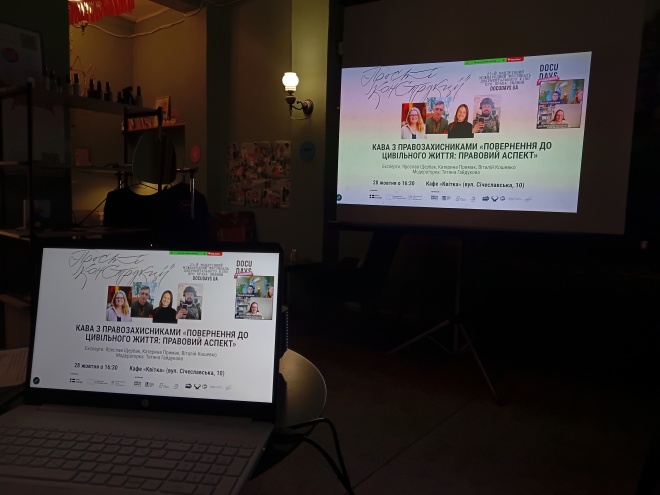
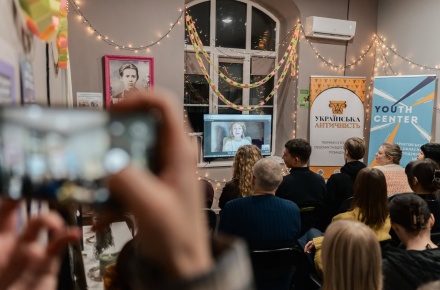
Photo: Online conversation with Kateryna Pryimak, veteran, combat medic, head of the VETERANKA movement and co-founder of the Women Veterans Movement.
Kateryna Pryimak pointed out that there is often a considerable gap between public services and the people they are intended to serve. People with disabilities feel this particularly acutely, as even an ordinary trip to a hospital or social services office can become a major challenge.
It is important not only to create new support programmes but also to ensure that they are accessible, easy to understand and responsive to people's actual needs. Returning to civilian life should not become an endless struggle against bureaucratic obstacles.
Legal Questions and an Expert's Answers
A separate part of the meeting focused on legal issues most frequently raised by service members and veterans. Lawyer Yaroslav Shcherbak explained what to look out for when applying for payments due to them, including military pay, compensation for unused leave, and one-time financial assistance in cases of disability or loss of working capacity.
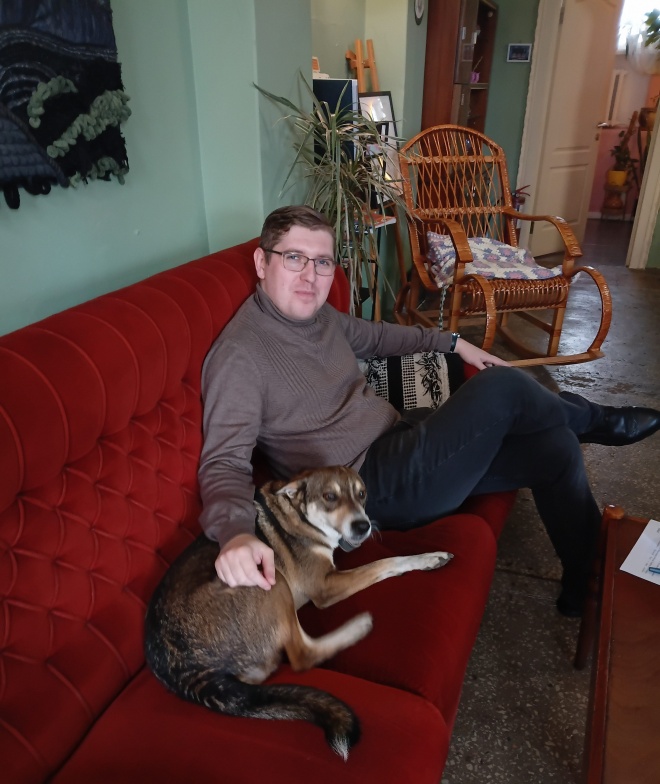
Photo: Yaroslav Shcherbak, lawyer specialising in military law.
The discussion also covered establishing a causal link between an injury and military service, medical assessment procedures, options for appealing relevant decisions, obtaining combatant status and using digital documents in the Diya app.
Another important topic was housing programmes for veterans and internally displaced persons. Participants discussed opportunities to receive financial compensation for purchasing a home, registering for housing and taking part in government preferential lending programmes.
Access to legal assistance alone is not enough to ensure a successful return to civilian life. People and institutions that service members and veterans can turn to with their questions are equally essential. In this context, participants highlighted the role of local administrative service centres, including the “I Am a Veteran” centre in Kryvyi Rih, veteran support specialists, veterans' spaces and civil society organisations. These can serve as the first point of contact for defenders and their families seeking support.
The meeting provided an opportunity not only to get answers to specific questions but also to hear about other people's experiences, discuss problems that often go unnoticed and find out where to turn for help.
After all, a dignified return to civilian life is not merely a matter of personal adaptation. It is also the responsibility of the state and the community to create conditions in which defenders can exercise their rights and access the services and support they need.
The 23rd Travelling Docudays UA is held with the financial support of the European Union, the Embassy of Sweden in Ukraine and the International Renaissance Foundation. The views, findings and recommendations expressed do not necessarily reflect those of the European Union, the governments or charitable organisations of these countries. The authors bear sole responsibility for the content of this publication.