“What Keeps Us Going”: Traces Screened in Kherson at Travelling Docudays UA
“What Keeps Us Going”: Traces Screened in Kherson at Travelling Docudays UA

The 23rd Travelling Docudays UA International Human Rights Documentary Film Festival is under way in Kherson. One of the films presented to local audiences was “Traces”, directed by Alisa Kovalenko and Marysia Nikitiuk. The film tells the stories of six women who survived sexual violence and torture during Russia’s war of aggression. Four of the women are from Kherson Oblast.
“I’m shocked” was one audience member’s first reaction after watching the film. During the discussion that followed, Kherson residents recalled torture chambers and their experiences of living under occupation. They then reflected on a question: what helps them keep going today?
A city where people live under constant threat
Kherson is a frontline city. Russian positions lie across the Dnipro River, just a few kilometres from the city centre. Before the full-scale invasion, around 315,000 people lived in the city; in the summer of 2026, the population stood at just over 60,000. According to the UN, 16 civilians were killed and another 202 injured in Kherson in September 2026 alone.

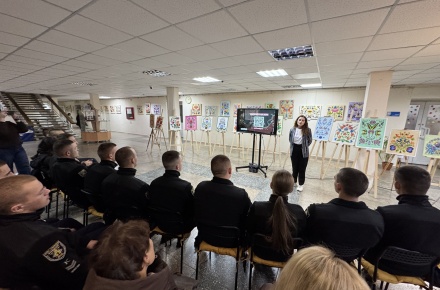
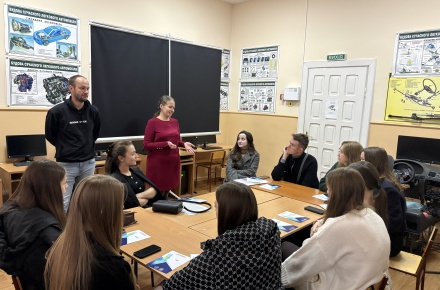
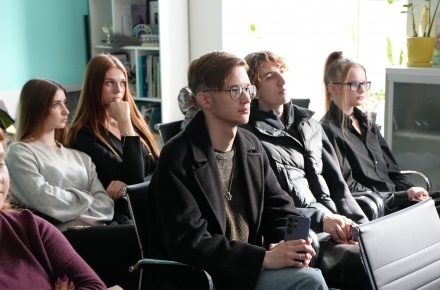
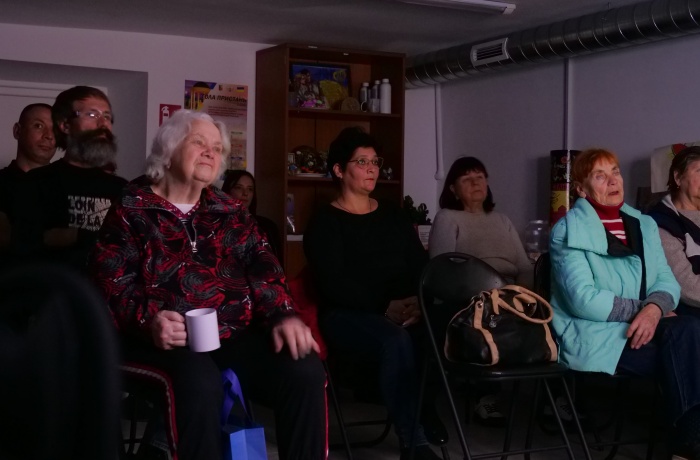
Photo: Event participants.
Despite the danger, events like this are important to Kherson residents: they offer an opportunity to share a common pain and experience. Those who attended the discussion included civil society activists, survivors of torture and local residents who wanted to learn more about what had happened in their community. One Kherson resident said she had spent two days in a cell on Teploenerhetykiv Street. She had not been tortured herself but had heard what was happening to others. Another spoke about a basement beneath the Court of Appeal building, where she had been interrogated and tortured. All these accounts echoed the stories of the women featured in the film.
Four of the film’s protagonists are from Kherson Oblast
“Traces” tells the stories of six Ukrainian women who survived sexual violence and torture. Four of them are from Kherson Oblast, and parts of the film were shot in Kherson and other localities across the region. One of the protagonists, Olha Cherniak, joined the discussion online. She said that after returning from captivity, she was unable to process what she had been through straight away. The support of other women helped her speak about her experience and bear witness to it.
“Don’t be ashamed. You have to speak out, you have to bear witness, you have to make sure the whole world knows and hears,” Olha recalled the advice she had received from another woman after her release from captivity.

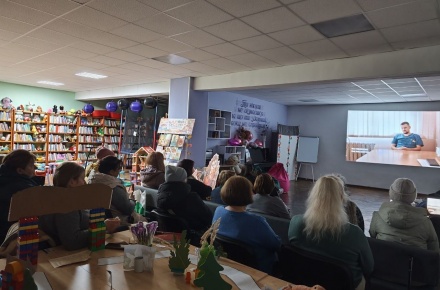
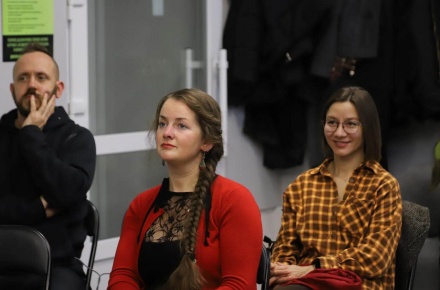
Photo: Event participant.
For director Alisa Kovalenko, it is particularly important to screen the film in Kherson Oblast, the home region of some of its protagonists. Alisa herself experienced sexual violence and torture while in captivity in Donbas in 2014. In 2016, she spoke publicly about what had happened to her and, according to her, became the first woman in Ukraine to speak openly about conflict-related sexual violence.
Documented cases represent only part of the true scale
According to figures released by Ukraine’s Prosecutor General on 19 June 2026, law enforcement authorities have documented 401 cases of sexual violence against civilians perpetrated by Russian military personnel since the beginning of the full-scale invasion. The survivors include 250 women and 151 men, including 24 minors. Kherson Oblast has recorded 124 cases, the highest number of any region. The Prosecutor General cautioned that the actual figure may be higher, as not all survivors are able or willing to report what they have experienced.

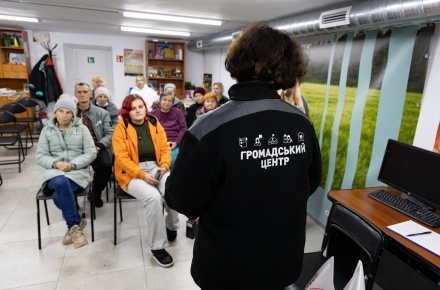
Photo: Nataliya Shatilova, coordinator of the Ukrainian Red Cross community centre and head of the Hromada “UA” NGO.
The UN also notes that documented cases do not reflect the full scale of the violence: one person may have experienced multiple incidents. Fear, stigma and having family members in occupied territories can prevent survivors from coming forward.
Simple structures are what keep us going
Kherson residents who took part in the discussion named the things that help them hold on: children, loved ones, work, volunteering, gardening, handicrafts and spending time together. One audience member said she had learned to crochet; another shared that she helped the military. People also spoke about conversations and hugs.
Nataliya Shatilova, coordinator of the Ukrainian Red Cross community centre, explained that simply meeting in person can already be a source of support for Kherson residents:
“Today, just by meeting offline, talking face to face and having coffee together, we have already gained something very positive.”

Photo: Creative reflection during the discussion.
In this way, the conversation following “Traces” returned to the theme of the 23rd Travelling Docudays UA. On a tree drawn on paper, participants wrote down their own “simple structures” — the people and activities that help them keep going in a city where people are injured in shelling almost every day. The screening ended, but participants stayed on to continue the discussion. That, too, was one of the sources of strength they identified.
The regional partner in Kherson Oblast is the Mercy and Health Foundation Charitable Organisation, in cooperation with the Ukrainian Red Cross Community Centre.
Text by Liza Zharkykh.
Photos by Ustyn Danchuk.
The 23rd Travelling Docudays UA is held with the financial support of the European Union, the Embassy of Sweden in Ukraine and the International Renaissance Foundation. The views, conclusions and recommendations expressed in this publication do not necessarily reflect those of the European Union, the governments or charitable organisations of these countries. The authors of this publication bear sole responsibility for its content.