In Search of a New “A Normal Life”: How Documentary Film Brought Together Internally Displaced People in Kompaniivka Community, Kirovohrad Oblast
In Search of a New “A Normal Life”: How Documentary Film Brought Together Internally Displaced People in Kompaniivka Community, Kirovohrad Oblast
As part of the 23rd Travelling Docudays UA in Kirovohrad Oblast, an event once again demonstrated that documentary film can do more than raise important issues — it can also pave the way for mutual support. A simultaneous screening of the film “A Normal Life,” followed by a joint discussion via video link, connected two dormitories for internally displaced people in the villages of Zelene and Sofiivka, both in Kompaniivka community.
The gathering created a space for bringing together people who had lost what mattered most to them because of the war: pensioners, people with disabilities and large families. Although they now all live in the same community, they had never met before.
A Bridge to “A Normal Life”
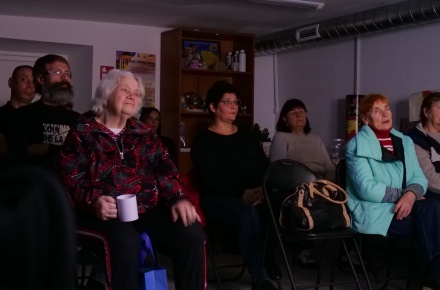
The joint event began with simultaneous screenings of Mykola Nosok’s documentary “A Normal Life” in Sofiivka and Zelene.

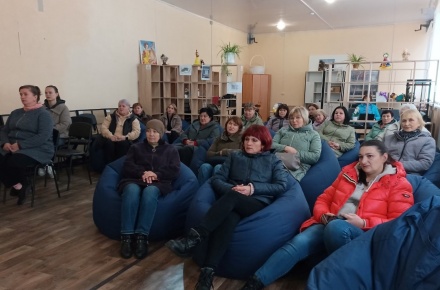
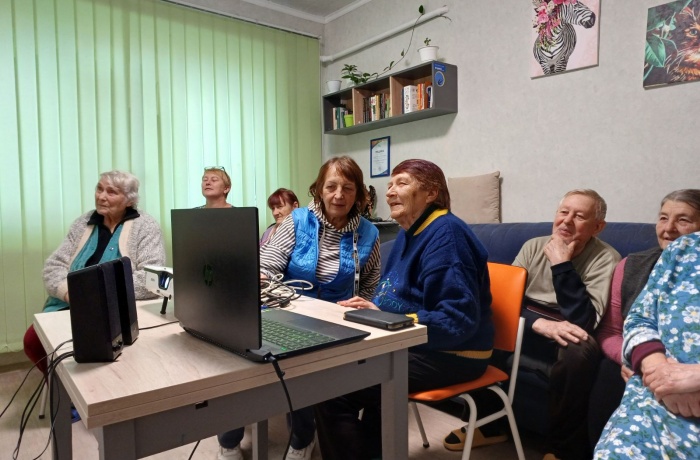
Photo: Event attendees from the village of Sofiivka.
The film tells the story of a mother of many children who, after fleeing Russian occupation, struggles to keep her family together as she builds “a normal life” amid the ruins of a shattered world. Gradually, she discovers that normality no longer means peace and quiet, but simply the ability to carry on living, to love and not to lose herself.
The film struck a deep chord with the audience. After the screening, people admitted that, like the film’s protagonists, they put enormous effort into rebuilding their lives every day.
Unity Across Distance
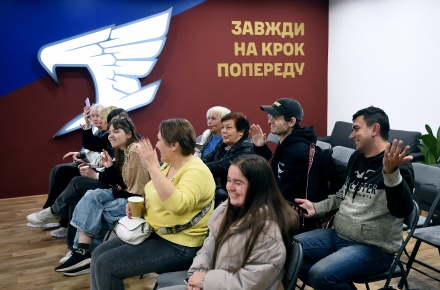
After the screening, viewers from the two villages met online. When faces from the other dormitory appeared on their screens, the participants in the video call could not hold back their tears or laughter. They eagerly looked for people from their hometowns, sharing memories of the cities they had left behind, their cosy parks and squares, and their favourite shops. They also discussed their everyday lives, exchanged experiences of living in dormitories and talked about adapting to life in Kompaniivka community.

Photo: Event attendees from the village of Zelene.
The conversation gave participants an opportunity to share their feelings and experiences with people who could understand and relate to their pain over loved ones still living in occupied territories, their sorrow over lost contact, and their joy at the rare messages they received on social media. At the end of the online meeting, both groups expressed a sincere wish to meet in person.
“We’ll now look for ways to organise face-to-face meetings,” said Olena Mirkhaidarova, regional coordinator of Travelling Docudays UA in Kirovohrad Oblast and chair of the board of the InterAction NGO.
The most poignant moment of the video call was a conversation between two women. As it turned out, both were originally from Soledar, but now live in different villages within the community. As they spoke online, they were astonished to discover that they had lived on the very same street back in their hometown. This unexpected reunion gave them a sense of home — something so difficult to find in an unfamiliar place.

Photo: Event attendees from the village of Sofiivka.
This is the community-building power of documentary film: bringing people together, fostering mutual support and amplifying the voices of those who need to be heard.
The event was organised by the InterAction NGO, Travelling Docudays UA’s regional partner in Kirovohrad Oblast, and the Centre for Public Libraries of Kompaniivka Settlement Council.
Photos by Nadiya Zhyvitska.
The 23rd Travelling Docudays UA is held with financial support from the European Union, the Embassy of Sweden in Ukraine and the International Renaissance Foundation. The views, findings and recommendations expressed do not necessarily reflect those of the European Union, the governments or charitable organisations of these countries. The authors bear sole responsibility for the content of this publication.