How to Talk about What We Have Been Through and Find Support in Art: Opening of the Travelling Docudays UA in Zaporizhzhia
How to Talk about What We Have Been Through and Find Support in Art: Opening of the Travelling Docudays UA in Zaporizhzhia
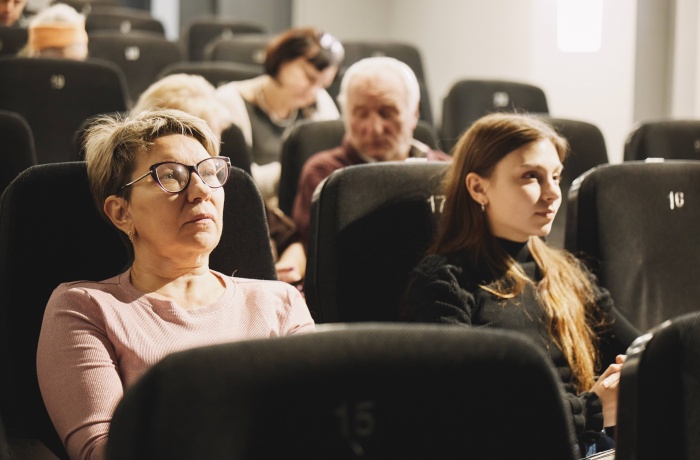
The 23rd Travelling Docudays UA International Human Rights Documentary Film Festival has begun in Zaporizhzhia. The opening brought together two events organised by the Festival’s regional partners, the NGOs Doloni Communication Centre and Cultprojector.
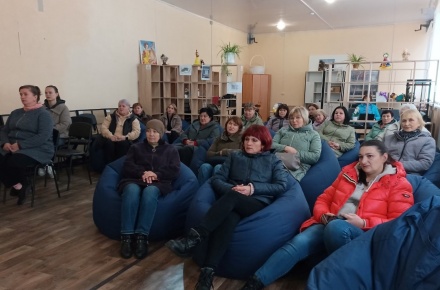
In the shelter of the Zaporizhzhia Regional Universal Science Library, the film Traces by Alisa Kovalenko and Marysia Nikitiuk was screened, followed by a human rights discussion about supporting survivors of conflict-related sexual violence. At the Dovzhenko Cinema, audiences watched Andrii Lysetskyi’s film The Blessed Ones and discussed the role of art during the war.
Traces: How to Talk about What People Have Been Through and Support Survivors
After the screening, director Alisa Kovalenko joined the discussion online. Together with the film’s protagonist, Iryna Dovhan, she is presenting the film abroad as part of a working tour of Europe. The director joined the Zaporizhzhia audience from Nuremberg. The meeting gave them an opportunity to hear directly from Alisa, ask questions and discuss the stories the film reveals to the world.
“This is the story of a journey from silence and isolation to sisterhood and collective action. The story about how a voice can become a form of resistance,” Alisa Kovalenko comments.
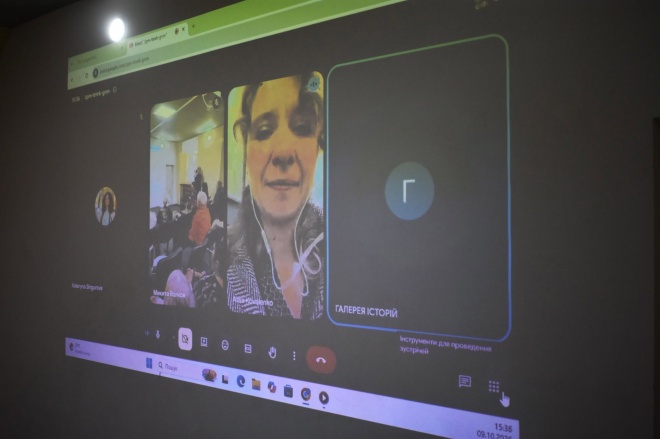
Photo: A conversation with Alisa Kovalenko, director of the film Traces
The importance of such meetings for audiences in Zaporizhzhia was emphasised by Kateryna Sinhurova, Project Manager of the Travelling Docudays UA Festival:
“It is important for audiences that directors find an opportunity to be present and speak with them. This is particularly valuable for frontline communities, where war is part of everyday reality. For people, Festival screenings and discussions are not only an opportunity to take their minds off things but, first and foremost, to support one another and share their feelings and thoughts.”
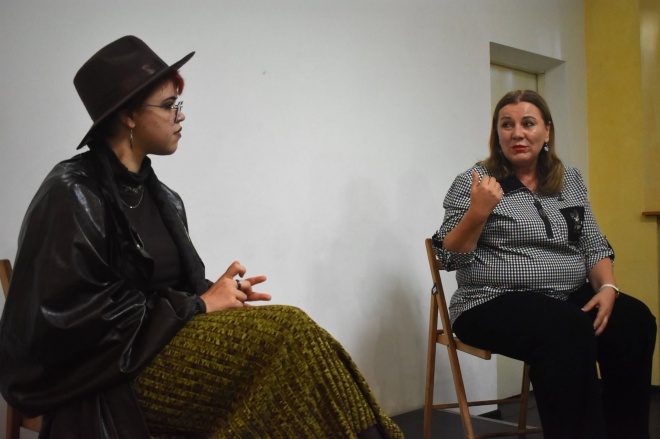
Photo: Liza Zatsarna, journalist at the Zaporizhzhia Centre for Investigations, and Antonina Shostak, Chair of the Board of the Egida Zaporizhzhia Human Rights NGO
After the screening, the conversation about what people have experienced continued during the human rights discussion To Hear, Understand, and Support. Two speakers took part: Antonina Shostak, human rights defender, lawyer and Chair of the Board of the Egida Zaporizhzhia Human Rights NGO; and Liza Zatsarna, journalist at the Zaporizhzhia Centre for Investigations, activist and student.
The participants discussed conflict-related sexual violence, support for survivors, overcoming stigma, responsible reporting of personal stories, and the documentation of war crimes. Particular attention was paid to the perspective of young people: how they perceive war crimes, make sense of what they have heard and seen, and what role they can play in preserving memory and spreading the truth. Among the important questions raised during the discussion were how to talk about what people have been through without re-traumatising them, how to support someone who has survived violence, and why documenting crimes is essential. These questions require not only professional answers, but also attentiveness from each and every one of us.
The Blessed Ones: What Can Art Do When the World Is Burning?
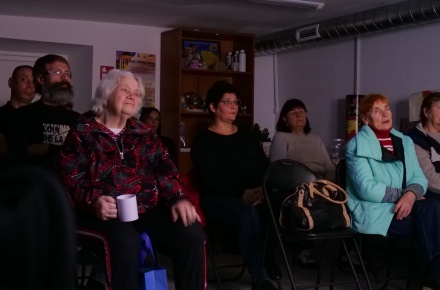
Another opening event in Zaporizhzhia was organised by the Cultprojector NGO. The Dovzhenko Cinema hosted a screening of Andrii Lysetskyi’s documentary The Blessed Ones about contemporary Ukrainian artists facing a once unthinkable question: what can an artist do when the world is burning? This question became the starting point for a conversation with the audience about the place of art and creativity during the war. How can we act when the familiar world is changing and war becomes part of everyday life? Can creativity be a way of responding to pain and seeking answers to difficult questions? These reflections continued the themes raised by the film.
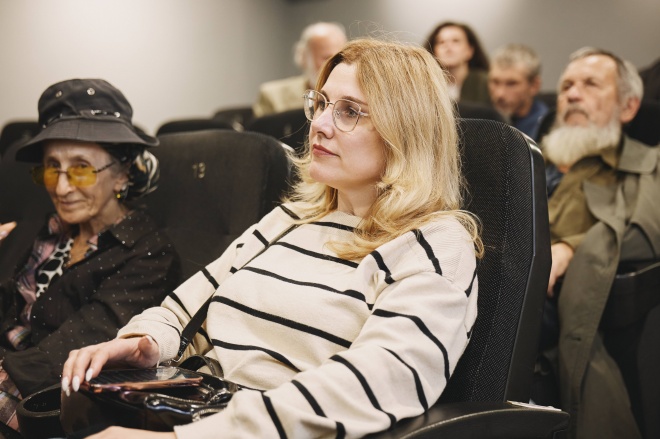
“Films like this should be shown to young people. They let us see that it is possible to do something even with the pain of war, and creativity is one of the ways,” one audience member shared.
An important part of such meetings is not only watching the film, but also having the opportunity to discuss it in a comfortable space where everyone can respond in their own way. This was emphasised by Svitlana Mamai, Regional Co-ordinator of the Travelling Festival in Zaporizhzhia:
“After films like these, some people need to talk it out, while others simply need to sit in silence alongside other people. Both options are normal, and that is also why we come together.”
The two opening events differed in their themes, but both created a space for reflecting together on the experience of war. Traces provided an opportunity to discuss survivors’ testimonies, support and the search for justice, while The Blessed Ones explored the possibilities of art and creativity at a time when familiar life is changing.
The Festival programme in Zaporizhzhia will continue until 23 October. During this time, audiences will be able to attend more than 30 events. In addition to film screenings, the organisers have prepared a human rights programme in the context of the Festival’s theme, Simple Structures, focusing on the foundations that sustain Ukrainian civil society. Participants will be able to discuss the formation and rethinking of Ukrainian identity, the rights of internally displaced people and veterans, as well as the right to safety during the war. The programme also includes informal meetings with human rights defenders over coffee and conversations about documentary filmmaking.
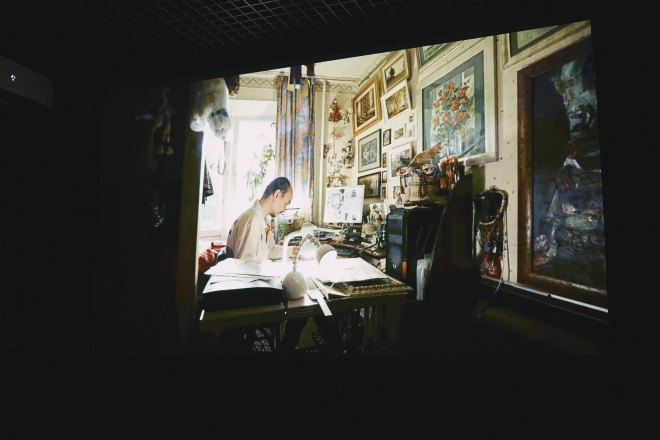
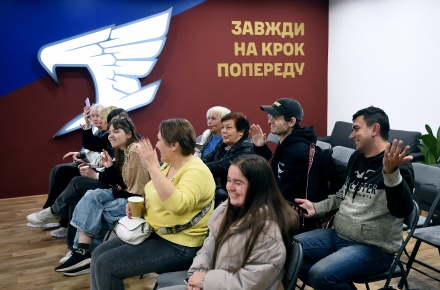
Photo: Screening of the film The Blessed Ones.
Event schedule on the the Travelling Festival’s website.
Photo credit: Serhii Kucherenko, Anastasiia Smirnova.
The 23rd Travelling Docudays UA is held with the financial support of the European Union, the Embassy of Sweden in Ukraine and the International Renaissance Foundation. The opinions, conclusions or recommendations expressed do not necessarily reflect the views of the European Union, the governments or charitable organisations of these countries. Responsibility for the content of this publication lies solely with its authors.