How Simple Things Become Our Strongest Inner Anchors: Screening of Apocalypse Yesterday, Today, Tomorrow and the Day After Tomorrow in Uzhhorod
How Simple Things Become Our Strongest Inner Anchors: Screening of Apocalypse Yesterday, Today, Tomorrow and the Day After Tomorrow in Uzhhorod
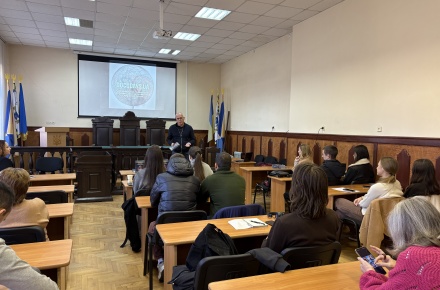
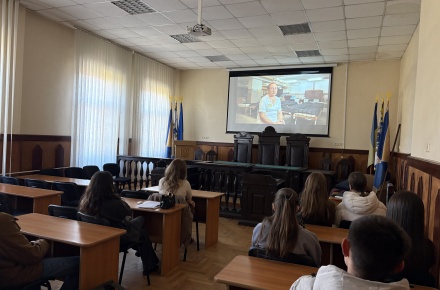
Will the apocalypse really come tomorrow and the day after, or should we focus on the present? A discussion took place at the University of the Third Age in Uzhhorod, exploring the often conflicting yet inseparable coexistence of light and darkness through the documentary film Apocalypse Yesterday, Today, Tomorrow and the Day After Tomorrow by Anastasiya Bonadyha.
At the beginning of the event, Mariya Symkovych, coordinator of the 23rd Travelling Docudays UA festival in Zakarpattia, introduced the audience to this year's festival theme, “Simple Sctructures”, and invited participants to look at familiar things and social phenomena from a new perspective.
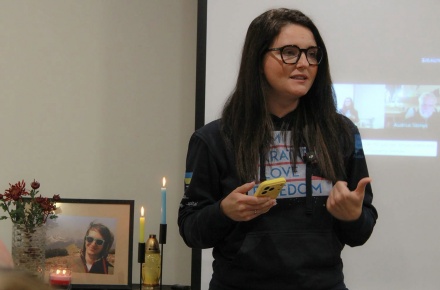
Lesia Nosenko, a festival partner and representative of the Dream in Action organisation, continued the discussion by addressing accessibility at cultural events. She spoke about the importance of creating conditions in which everyone, regardless of their needs, can participate in cultural life and be a full-fledged member of society.
Uncertainty and the Path to Making a Choice
The film takes viewers to Nikopol, a city that comes under enemy shelling every day and lies on the banks of the drained Kakhovka Reservoir. Despite constant attacks, damage to energy infrastructure and the daily threat to life, the story centres on Bohdan. Through his faith, he finds his own path to inner strength. His decision to stay at home is not simply a refusal to evacuate, but a conscious choice that requires daily inner effort.
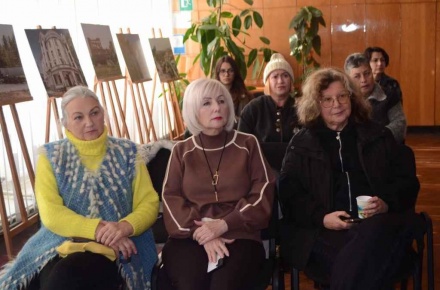
The screening sparked a lively and, at times, emotional discussion. The audience included both long-time residents of Zakarpattia and people who had moved to Uzhhorod from other regions of Ukraine, some of them after experiencing occupation. Thus, everyone viewed the film through the lens of their own experiences, emotions and life circumstances.
The discussion focused on the dismay of those who remain in dangerous cities. One participant noted that many people, like the film's protagonist, struggle to decide whether to stay at home or leave. They live with uncertainty, not knowing what tomorrow will bring, and gradually lose their sense of direction. Responsibility for children or relatives who need care is often another reason why people choose to stay.

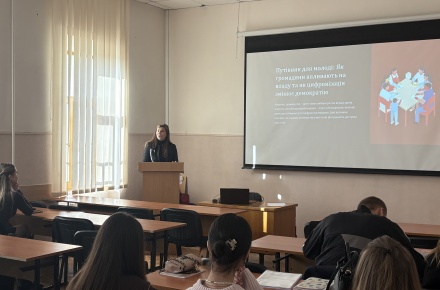
Photo: Participants of the event.
In her view, the film should be screened for schoolchildren as young as 10–12 years old, as documentary cinema helps them understand the reality of war. At the same time, she stressed that the film shows only a small part of what people in Nikopol are going through. The only way to fully understand their experience is to visit the city, but unfortunately, not everyone who stays there makes it back.
What Can We Hold On to in an Apocalypse?
The film's title also prompted mixed reactions from the audience. One participant admitted that she found it overly pessimistic and suggested stopping at the word “today”, leaving a question mark after “tomorrow”. In her view, it is important to focus not only on pain but also on the brighter things in life and to imagine a future in which there is hope. Constantly dwelling on despair and hopelessness can be just as destructive as external circumstances.
Another participant, however, felt that it was important to show the pain and the scale of destruction. The director reveals how many lives have already been destroyed by the war and how many more may yet be shattered. In her view, people need to see this reality rather than turn away from it.
Faith as a source of inner strength was another topic of discussion. One audience member shared:
“We talked about sources of strength today. For me, God is that source. You can see this in the film, too. Love is another source of strength: there were many shots of animals, and in those moments when someone cared for someone else, you could see how support runs through the film like a thread — support rooted in the love that exists in every person.”
She also drew attention to the care, mutual assistance and support portrayed in the film. Regardless of their religious beliefs, people need someone by their side who can support them in difficult moments. It is precisely our humanity and inner goodness that help us persevere despite the circumstances.
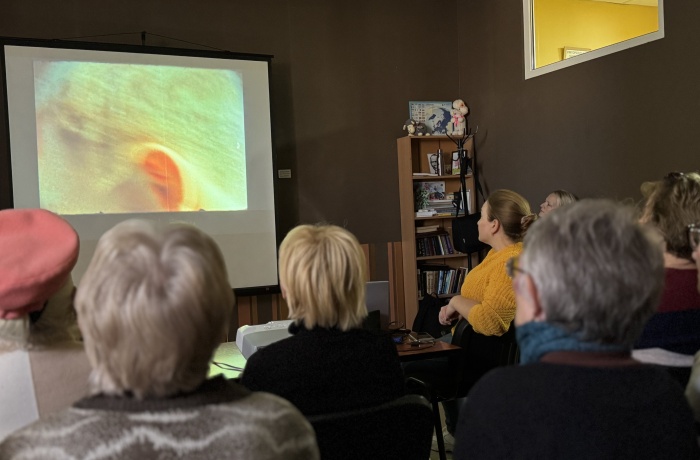
Another viewer was particularly moved by the scenes of Ukrainian nature — the sea, clouds, unusual sand formations and the vast expanses of the former Kakhovka Reservoir. Against the backdrop of destruction, these images served as a reminder of the beauty of our homeland and the value of things we often take for granted.

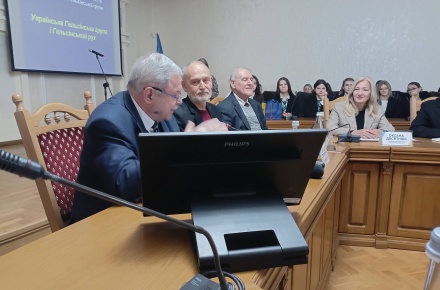
Photo: Participants of the event.
One of the most moving moments of the discussion was the testimony of a participant who had been forced to leave her hometown because of the war. She shared her experience of spending three months under occupation with her bedridden mother and her 14-year-old granddaughter.
“I have very painful memories. I spent three months under occupation with my bedridden mother and my 14-year-old granddaughter. At first, there was panic, then anger. I dug up the garden out of sheer anger. Women would come to my house to hide in the basement, but I couldn't join them because I had to stay with my bedridden mother.
The Russians would check everything, carrying their assault rifles. They even tipped my mother over, sofa and all. They would often point their guns straight at your chest, and you never knew whether you would make it out alive. We passed through 67 checkpoints, where we were searched every time. And when we passed the last one and heard the soldiers say, ‘Welcome to Ukraine!’, it was unforgettable.”
Her account became one of the most powerful moments of the event. Behind the scenes of a documentary film lies not an abstract story about war, but the lives of real people — their losses, decisions, fears and attempts to protect themselves and their loved ones.
Summing up the discussion, the moderator emphasised that the film explores human resilience, faith, the value of everyday things and the ability to find meaning in life even in the most difficult circumstances. At the same time, the discussion showed that the same story can evoke entirely different emotions and questions. And every experience deserves to be heard.
The 23rd Travelling Docudays UA festival is supported by the European Union, the Embassy of Sweden in Ukraine and the International Renaissance Foundation. The views, findings and recommendations expressed do not necessarily reflect those of the European Union, the governments or charitable organisations of these countries. The authors bear sole responsibility for the content of this publication.