Decolonisation Is Not Just about Renaming: How Ukraine Is Learning to See Its Own History
Decolonisation Is Not Just about Renaming: How Ukraine Is Learning to See Its Own History
What changes when Pushkin Street becomes Skovoroda Street? Not just the name on the sign. Along with it comes the question: who was Skovoroda, why should this street be named after him, whom are we accustomed to seeing in urban space and why — and what does this history say about us?
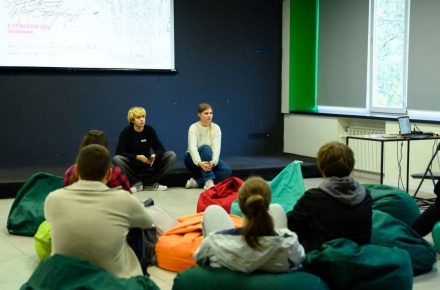
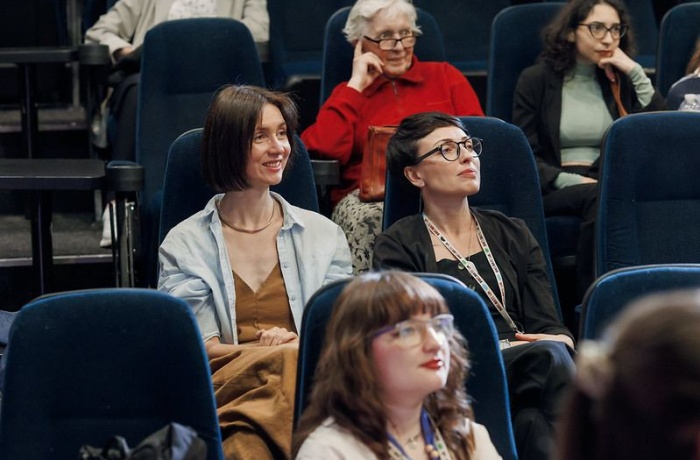
The discussion Seeing What Is Ours. Decolonisation through Local History and Memory featured Mariia Takhtaulova, historian, PhD, сo-ordinator of the Kharkiv Toponymics Group and Head of Department at the Ukrainian Institute of National Memory; and historian Anton Liahusha, Academic Director of the Master’s Programme in Memory Studies and Public History at the Kyiv School of Economics. The discussion was moderated by Anastasiia Bahalika, Director of the Human Rights Department at Docudays NGO and a journalist. They discussed why changing a street sign is not enough, how people reclaim the right to speak about the past in their own words through local history, and why decolonisation should not turn into the creation of a single ‘correct’ history of Ukraine.
Decolonisation in Ukraine is not limited to the mechanical renaming of streets and dismantling of monuments. It is a process of rethinking our own past—a past that is complex and differs from region to region. Due to the varying lengths of time spent within empires, the particularities of the language situation, urban culture and experiences of violence, different regions are going through decolonisation at different speeds and with varying intensity:
“Decolonisation can take place simultaneously at different levels: space, institutions, education and museums, especially when we speak about imperialism. It involves struggles and conflicts over memory, family, urban identity and, ultimately, the public narrative,” Anton Liahusha notes.
According to the historian, decolonisation is “not a process of unifying historical memory,” but an opportunity for different regions to rethink their own past outside the imperial framework. This requires movement in two directions: a legal framework and public dialogue within society. This synergy transforms decolonisation from an administrative procedure into a deeper process of decolonising consciousness.
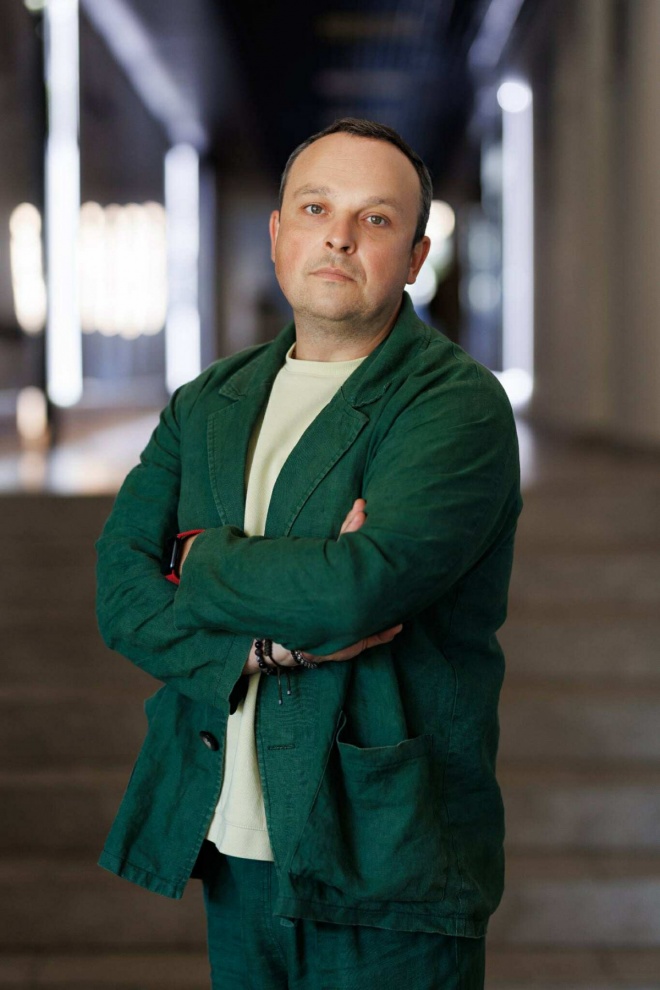
Anton Liahusha, Academic Director of the Master’s Programme in Memory Studies and Public History at the Kyiv School of Economics
It is also important for public discourse around decolonisation not to lose nuance and to avoid oversimplifying history and historical figures: not every name should be erased from history, but not every name should remain on a pedestal.
“Glorification, public commemoration and so on are one thing. Research and an honest dialogue within society about particular individuals are another,” Mariia notes.
The historian emphasises the need to examine each specific case rather than mechanically remove everything connected with the Russian Empire or the Soviet period. As an example, she cites the figure of the Duke de Richelieu, who, despite belonging to the imperial era, made a significant contribution to Odesa’s economic development. Another example concerns heroes of World War II: if the person in question is a local serviceman who directly defended their community, particularly if their family had lived there for many generations, then a street named in their honour cannot be renamed under current legislation.
As Co-ordinator of the Kharkiv Toponymics Group, Mariia considers the example of the decolonisation of Kharkiv as a city with its own particular social and cultural context. Although the first steps towards changing place names were taken in the late 1980s, systematic resistance from the local authorities and a significant proportion of the city’s residents remained strong for decades. However, Russia’s full-scale invasion became a powerful catalyst for society to rethink its past, and place names proved to be an effective entry point into the process of rediscovering heritage. The story of the renaming of Hryhorii Skovoroda Street, one of Kharkiv’s central streets formerly called Pushkin Street, is illustrative: as recently as in 2022, the Mayor of Kharkiv still defended the old name, but after another missile strike on the street in 2024, the Mayor himself proposed renaming it.
“Through such a fairly utilitarian thing as street names, we reach deeper layers and, in this way, explore and rediscover ourselves, seeing what is ours, things we were once forbidden to see for colonial reasons,” Mariia comments.
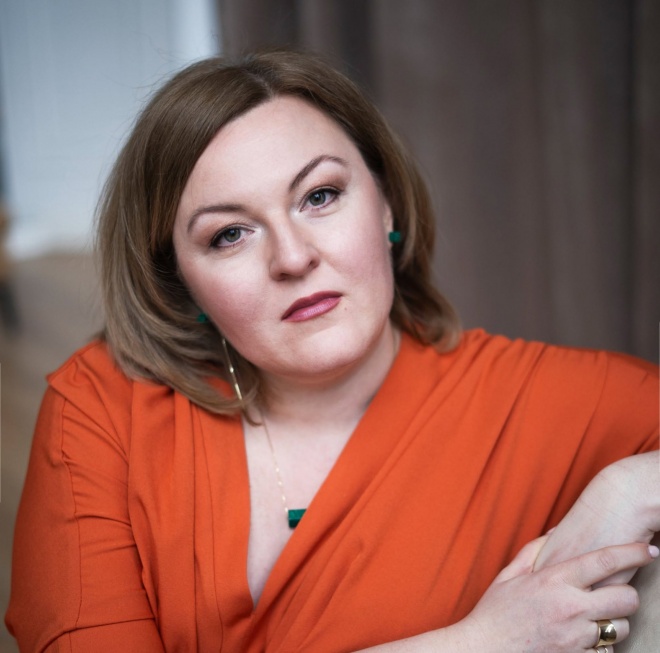
Mariia Takhtaulova, Head of Department at the Ukrainian Institute of National Memory
Changing a street’s name prompts people to ask: who is this person? When residents begin asking who these people are, they turn to museums, learn about Ukrainian culture and discover their own history. For example, when Lermontov and Tchaikovsky gave way to Mike Johansen and Mykhailo Semenko in the names of Kharkiv’s streets, this encouraged Kharkiv residents to discover the figures of the Executed Renaissance.
Sociological studies of public opinion among Kharkiv residents over the years allow us to view decolonisation not as an abstract government campaign, but as a change in public perception: in 2008, 80% of Kharkiv residents supported preserving the Lenin monument. Today, according to the data cited by Mariia, 64% of residents of eastern Ukraine support dismantling markers of the communist totalitarian regime, which correlates with the overall level of support for such changes across Ukraine at 70%.
The process of Ukraine’s decolonisation is undoubtedly continuing and only gaining momentum, but it is still very far from complete; on the contrary, as Anton summarises: “We are only at the beginning of the decolonisation process.” Therefore, both civic initiative and intellectual contributions to rethinking history are essential for further steps in decolonising Ukraine’s spaces and the consciousness of Ukrainians.
The 23rd Travelling Docudays UA is held with the financial support of the European Union, the Embassy of Sweden in Ukraine and the International Renaissance Foundation. The opinions, conclusions or recommendations expressed do not necessarily reflect the views of the European Union, the governments or charitable organisations of these countries. Responsibility for the content of this publication lies solely with its authors.